When a token appears on a major exchange, it can suddenly reach millions of new buyers. But getting listed is not automatic — it is a process of applications, due diligence, and negotiation, and understanding it helps you tell a real milestone from a paid placement.
Why a listing matters
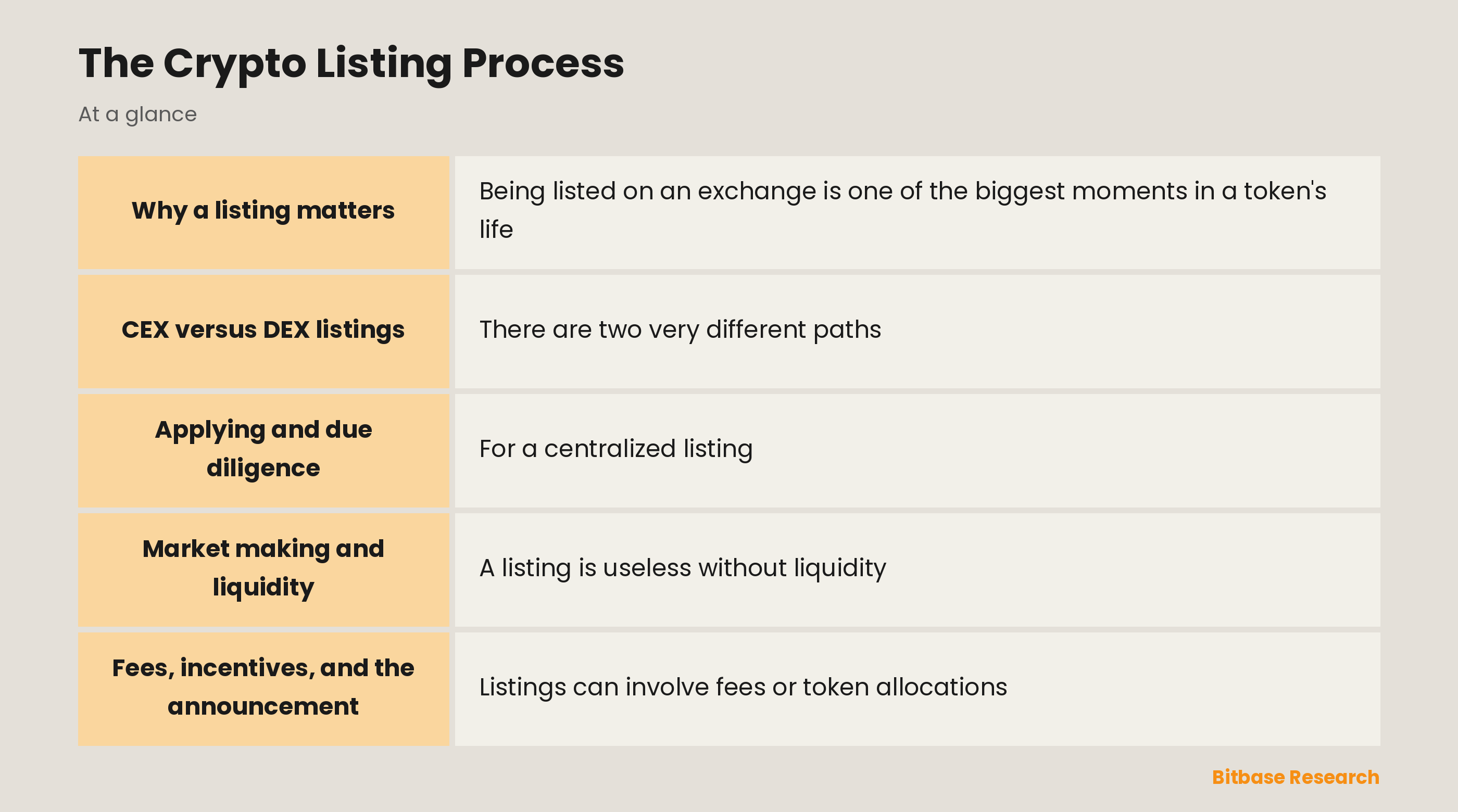
Being listed on an exchange is one of the biggest moments in a token's life. It brings liquidity, visibility, and access to a huge base of potential buyers who would never touch a token they had to find on their own. A listing on a large, reputable exchange is also a signal — a hint that the token cleared at least some vetting — though, as we will see, that signal is imperfect.
CEX versus DEX listings
There are two very different paths. On a decentralized exchange, listing is permissionless: anyone can create a market for any token instantly, with no gatekeeper — which is why scams flourish there. On a centralized exchange, listing is curated: the exchange decides what to list after a review process. The convenience of a CEX comes with a filter; the openness of a DEX comes with none.
Applying and due diligence
For a centralized listing, a project usually applies and then goes through due diligence. The exchange examines the team, the technology, the token's legal status, its tokenomics, and community demand, weighing the reputational and regulatory risk of listing it. Strong exchanges reject far more tokens than they accept, because a bad listing can harm their users and their brand.
Market making and liquidity
A listing is useless without liquidity, so projects often arrange market makers — firms that continuously quote buy and sell prices so trades can happen smoothly from day one. Part of the listing process is ensuring there is enough depth for real trading, not just a price with nothing behind it. Thin liquidity at launch is a common reason a new listing swings wildly.
Fees, incentives, and the announcement
Listings can involve fees or token allocations, and exchanges frequently pair a listing with promotions — trading competitions, airdrops, or launchpad events — to bootstrap activity. The public announcement itself often moves the price sharply. This is also where caution is due: a listing is a commercial arrangement, not a guarantee of quality, and "listing" hype is a favorite tool of low-quality projects.
The bottom line
Getting listed takes a token from obscure to accessible, through a path of application, due diligence, market making, and announcement that differs hugely between curated CEXs and permissionless DEXs. A listing on a serious exchange carries a real, if limited, signal of vetting — but never mistake being listed for being safe. The listing opens the door; your own research decides whether to walk through it.
Disclaimer: This article is educational content from Bitbase Academy, provided for informational purposes only. It is not investment, trading, tax, or financial advice. Written as of July 2026; rely on the latest official information.
References
[1] Kraken, "How do coins get listed on exchanges" kraken.com
[2] Cointelegraph, "How crypto exchange listings work" cointelegraph.com