
In crypto, a "coin" is the native asset of its own blockchain, while a "token" is built on top of an existing blockchain. The two are often used interchangeably, but the distinction matters. This guide explains it.
What a coin is
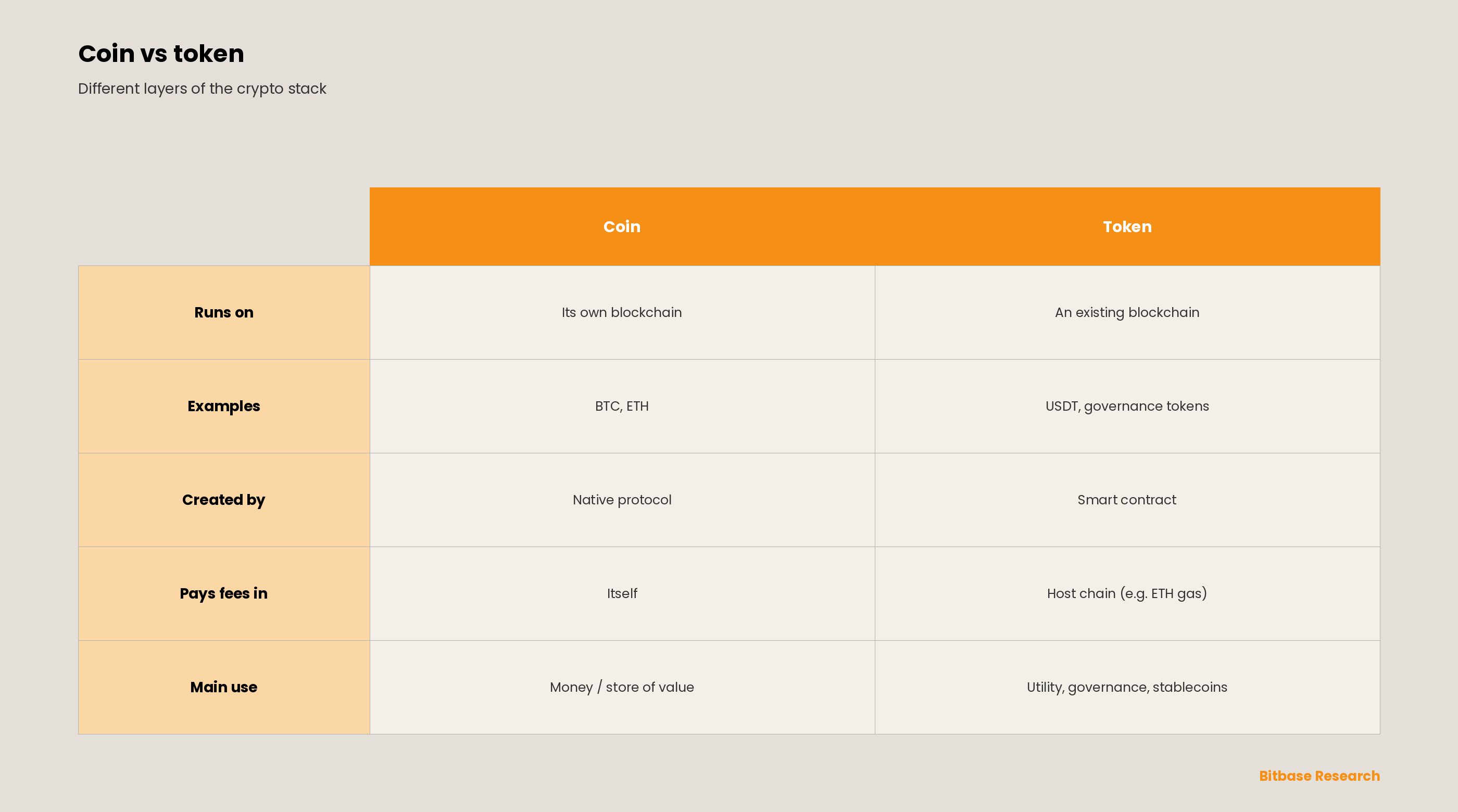
A coin is the native currency of its own blockchain. Bitcoin (BTC) is the coin of the Bitcoin network; Ether (ETH) is the coin of Ethereum. Coins pay the network's transaction fees, reward miners or validators, and often act as a store of value [1].
What a token is
A token is created on top of an existing blockchain — most commonly Ethereum — using smart contracts, rather than having its own chain. Tokens cover many uses: stablecoins, utility tokens (access to a service), and governance tokens (voting rights) [2].
Coin vs token at a glance
Why it matters
The practical difference: a coin's value and security are tied to its own network, while a token depends on the blockchain it is built on (and pays that chain's fees — for example, gas in ETH). Knowing which you hold clarifies how it works and where its risks lie.
The bottom line
A coin is a blockchain's own money; a token is an asset built on someone else's chain. Both are "crypto," but they sit at different layers. To keep learning the fundamentals, follow more from Bitbase Academy.
Disclaimer: This article is educational content from Bitbase Academy, provided for information only. It does not constitute investment, trading, tax, or financial advice. Written as of June 2026; refer to the latest official information.
References
[1] Kraken, "Crypto Coins and Tokens: What's the Difference?" kraken.com
[2] CoinMarketCap Academy, "Coin vs Token: What Is the Difference?" coinmarketcap.com