
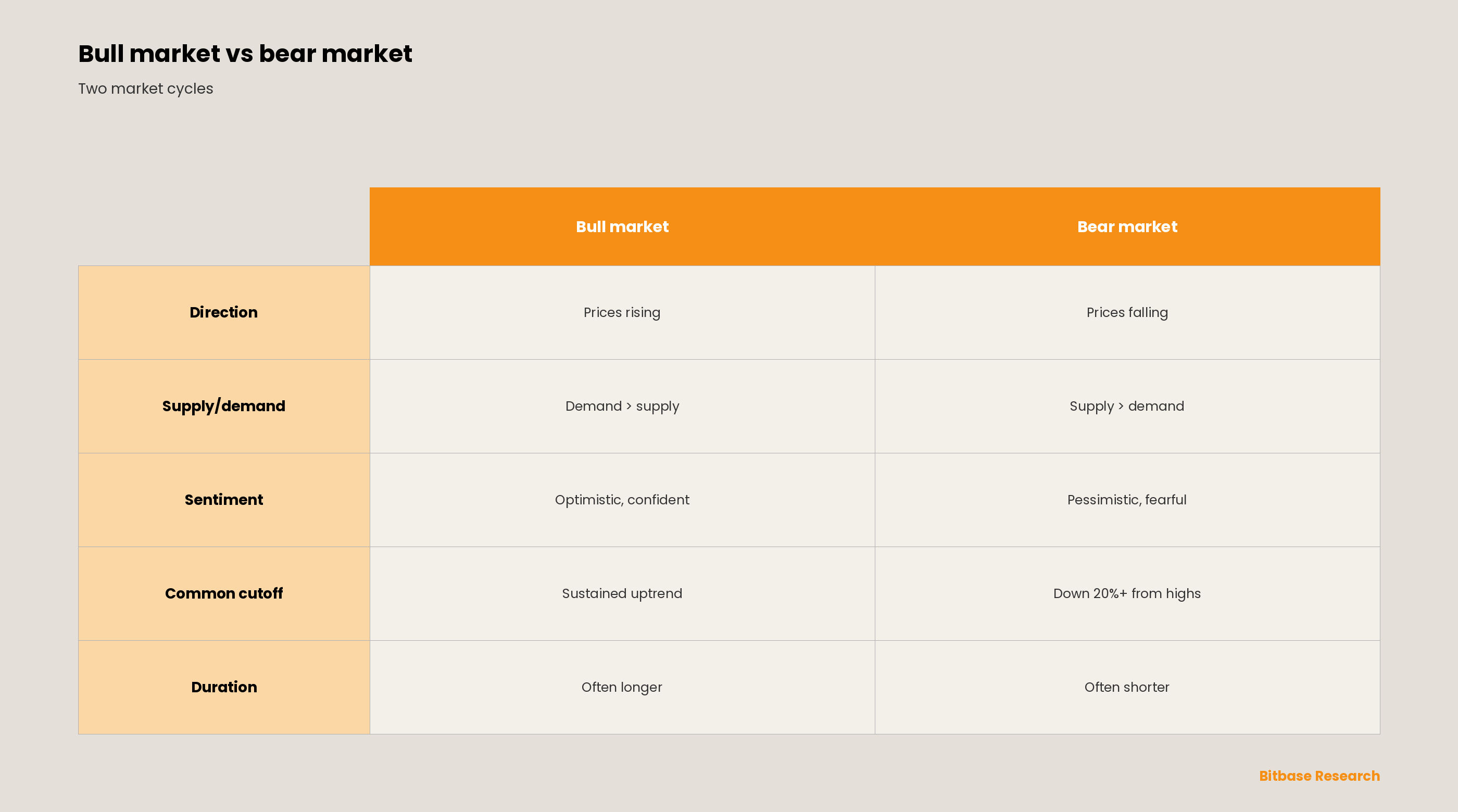
A bull market is a rising market; a bear market is a falling one. In a bull market, demand outweighs supply and confidence is high; in a bear market, supply outweighs demand and confidence is low. Understanding both cycles helps you stay calm. This guide compares them.
What a bull market is
A bull market (or "bull run") is a period where most investors are buying, demand outweighs supply, market confidence is high, and prices keep rising [1]. Historically, bull markets have tended to last longer.
What a bear market is
A bear market is a period where supply outweighs demand, confidence is low, and prices fall [1]. A common cutoff is a decline of 20% or more from recent highs that persists in a downtrend [2]. Bear markets are usually shorter than bull markets, but they are just as much a part of the cycle.
Side by side
The bottom line
Bull markets rise and bear markets fall — two sides of the market cycle. Understanding their traits and drivers helps you stay rational amid swings: cycles go up and down, so avoid being ruled by a single emotion. To keep learning the fundamentals, follow more from Bitbase Academy.
Disclaimer: This article is educational content from Bitbase Academy, provided for information only. It does not constitute investment, trading, tax, or financial advice. Written as of June 2026; refer to the latest official information.
References
[1] Coinbase, "What is a bull or bear market?" coinbase.com
[2] Gemini, "Bull vs. Bear Markets in the Era of Crypto." gemini.com