Author: Lin Lishan
Compared to the tycoons of the cryptocurrency empire, Changpeng Zhao is more like an engineer who treats life as a game to level up. Low-key, introverted, always wearing a hoodie to events big and small. The Binance he built has surpassed the New York Stock Exchange's total annual stock trading volume in 2025, with nearly 300 million users. Three years ago, he stepped down as CEO after being indicted by the U.S. Department of Justice, serving four months in prison, becoming what financial media called "the richest prisoner in U.S. prison history," and writing the first draft of his memoir "The Binance Life" on a prison computer without copy-paste functionality. He believes in "simulation theory," viewing life as a game where every solved puzzle brings a reward—a philosophy that keeps him unusually calm in crises. After the pardon, this 49-year-old engineer is redefining his next chapter.
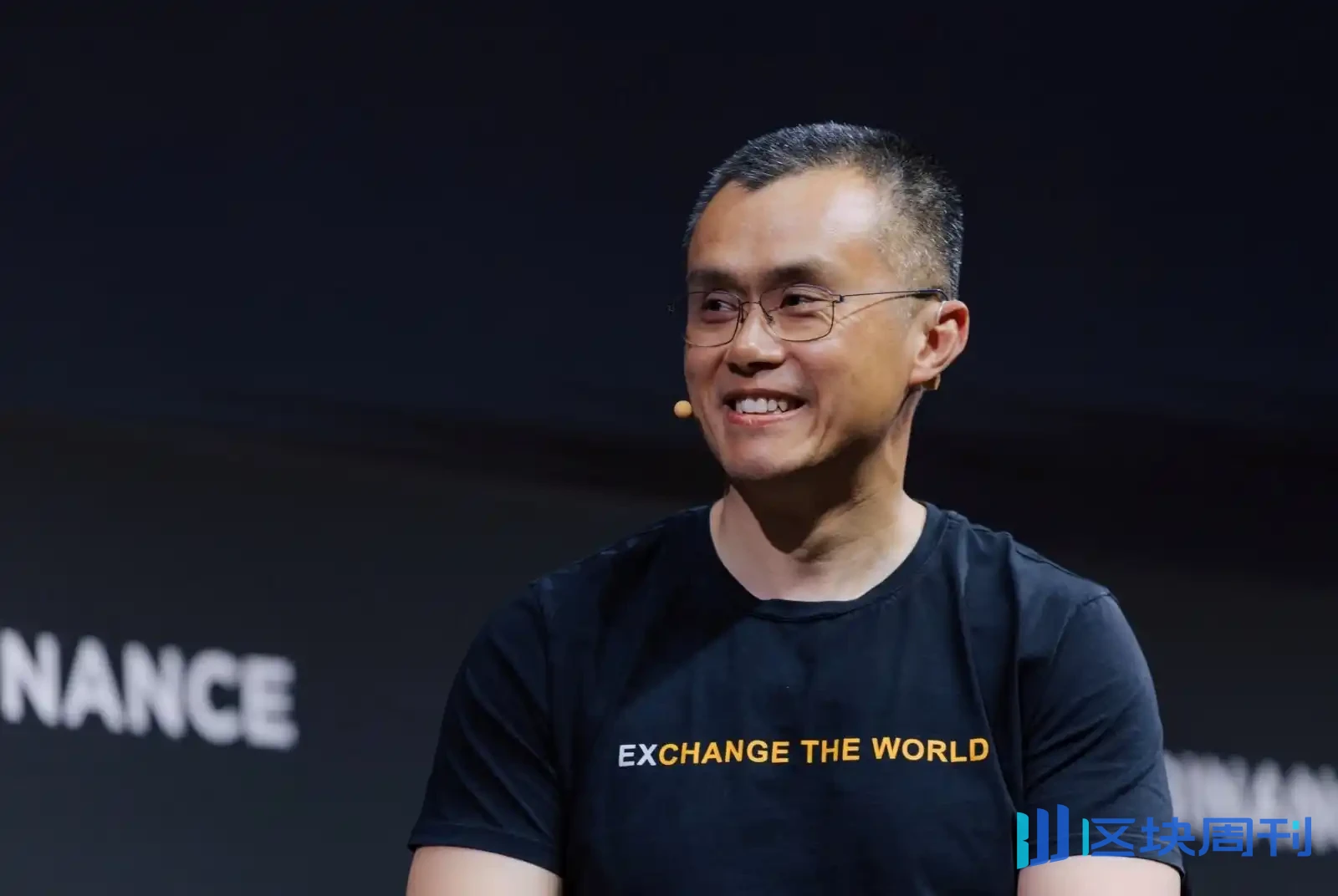
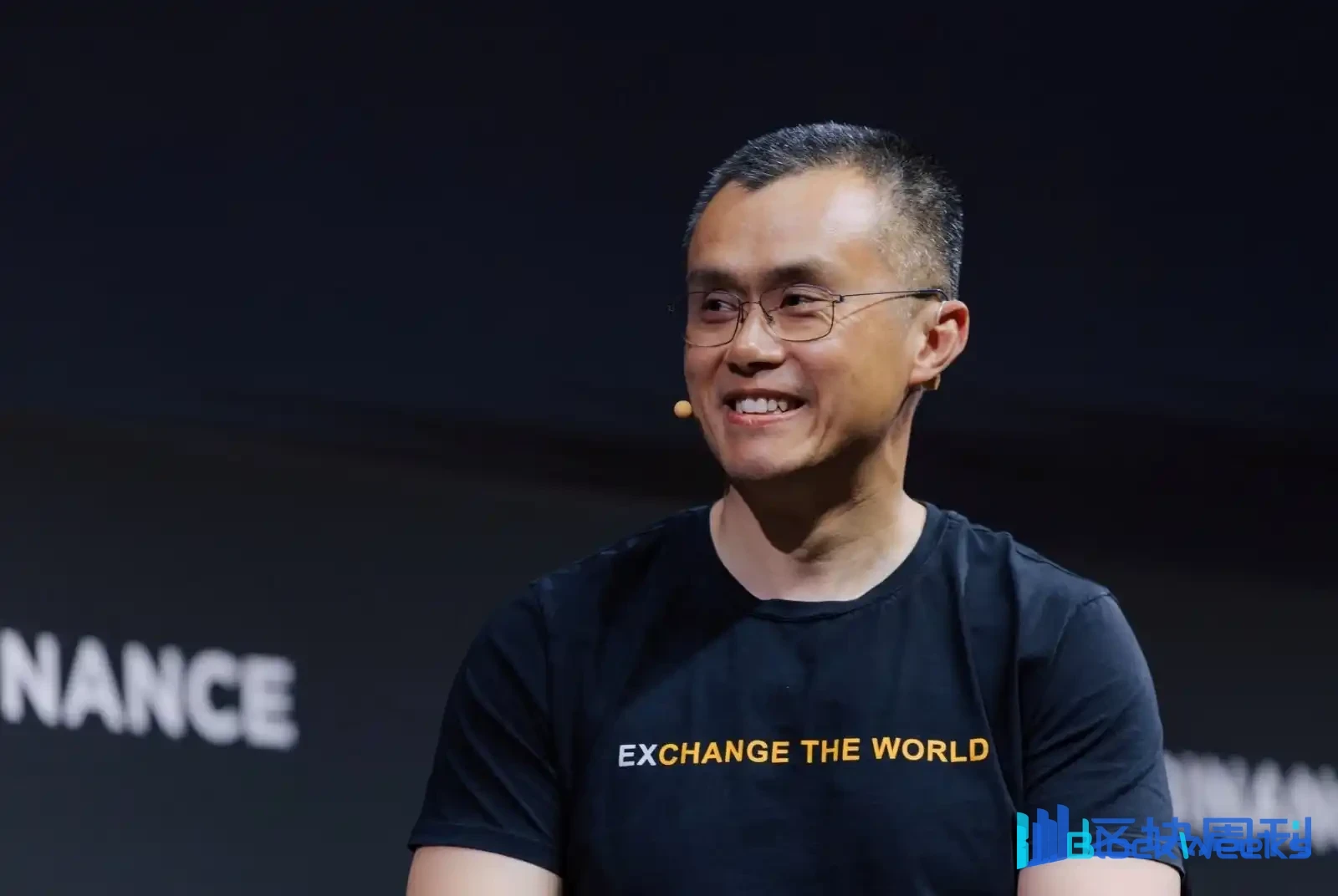
Changpeng Zhao, founder of the world's largest cryptocurrency exchange Binance, typed out his memoir "The Binance Life" word by word on a prison computer without internet access.
Source: Binance
Through a video call, seeing Changpeng Zhao, founder of the world's largest cryptocurrency exchange Binance, you wouldn't associate him with the tycoon dominating the crypto world or the former richest Chinese person.
He wears refined thin-rimmed glasses, still in a T-shirt with the Binance logo, looking more like a low-key, down-to-earth engineer—which he was before founding Binance.
However, since founding Binance in July 2017, his life has moved further away from low-key. Within months of its establishment, Binance became the world's largest exchange. In 2021, he graced the cover of Forbes. By 2025, Binance's total trading volume reached $34 trillion, surpassing the New York Stock Exchange's total annual stock trading volume; its user base hit 300 million, nearly the number of Netflix subscribers.
"The first 40 years of my life were uneventful," he said bluntly. Founding Binance was lucky, becoming the fastest startup to achieve $1 billion in profit in history. "Later, it might have been my hoodie photos that sparked people's interest. My life indeed began to change, even becoming so incredible that I think movies lack imagination. My reality is much crazier."
His reality is crazier than movies; his Chinese has a Taiwanese accent
Changpeng Zhao's life is indeed more dramatic than many movies. Three years ago, the U.S. Department of Justice filed charges against Binance and him personally, including violations of the Bank Secrecy Act (BSA, U.S. regulations requiring financial service providers to register and prevent money laundering), operating an unlicensed money transmission business, and violating the International Emergency Economic Powers Act sanctions. At that time, Binance had already moved from Shanghai to Tokyo, then Singapore, and finally to Dubai.
"I voluntarily flew to the U.S. and admitted to violating one provision of the U.S. Bank Secrecy Act. Simply put, Binance served U.S. users in its early days but did not register in the U.S. That's my entire crime," Zhao explained. He believes there was no fraud, no money laundering, no victims, and no user losses. However, the U.S. court sentenced him to four months in prison, making him the first person ever imprisoned for BSA violations.
Ironically, after he served his sentence, paid his fines, and was released for a year, U.S. President Donald Trump, who likes cryptocurrencies, pardoned the conviction records of Binance and Zhao personally, and will terminate the Department of Justice's originally scheduled three-year supervision period.
Zhao, whose life has been fast-forwarding, was forced to slow down and hit pause during the lengthy legal battles. Inspired by prison consultant Michael Santos, he began to conceive writing a book. In prison, using a shared computer without internet or even copy-paste functionality, he typed out the draft of his memoir "The Binance Life" for 15 minutes each day, word by word. The traditional Chinese version will be released in mid-July.
In an exclusive interview with CommonWealth Magazine, we surprisingly found that this crypto tycoon, born in Qingkou Town, Ganyu County, Jiangsu Province, speaks Chinese with a rather亲切 "Taiwanese accent." "My close friends in my teenage years were almost all Taiwanese, and my first girlfriend was also Taiwanese," he proudly opened. He has visited Taiwan no fewer than 30 times, familiar with places from north to south.
At age 12, Zhao's family moved to Vancouver to join his father, who was pursuing a Ph.D. in Canada. In the Chinese community he was part of, most were wealthy Taiwanese immigrant families, with many fathers being doctors and mothers accompanying children to study in Canada. As a result, his English is more fluent than Chinese, and his Chinese accent has a bit of a Taiwanese flavor. Even when choosing a major in college, he once followed the advice of a Taiwanese friend's mother to study biology, aiming for a medical career, but eventually gave up and switched to programming.
"Hardcore" Binance: Managing a global team with results-oriented approach
Before founding Binance, Zhao was already a financially free engineer. He worked at a renowned software company in Tokyo; led a 60-person development team at Bloomberg in New York for futures trading systems; later returned to Shanghai to start a fintech company, providing system outsourcing for many large exchanges.
Familiar with the system intricacies of large exchanges, Zhao founded Binance, excelling in system stability, trading interface, and speed over competitors at the time. With just one BNB token, one BNB chain, and one exchange, he mobilized the entire vast Binance ecosystem.
He is more mature than passionate young entrepreneurs, so his style is also vastly different from other crypto entrepreneurs. He is neither like Ethereum founder Vitalik Buterin, an idealistic mathematical genius, nor like the early Chinese crypto entrepreneurs with a somewhat rough-and-tumble style of mining farm owners.
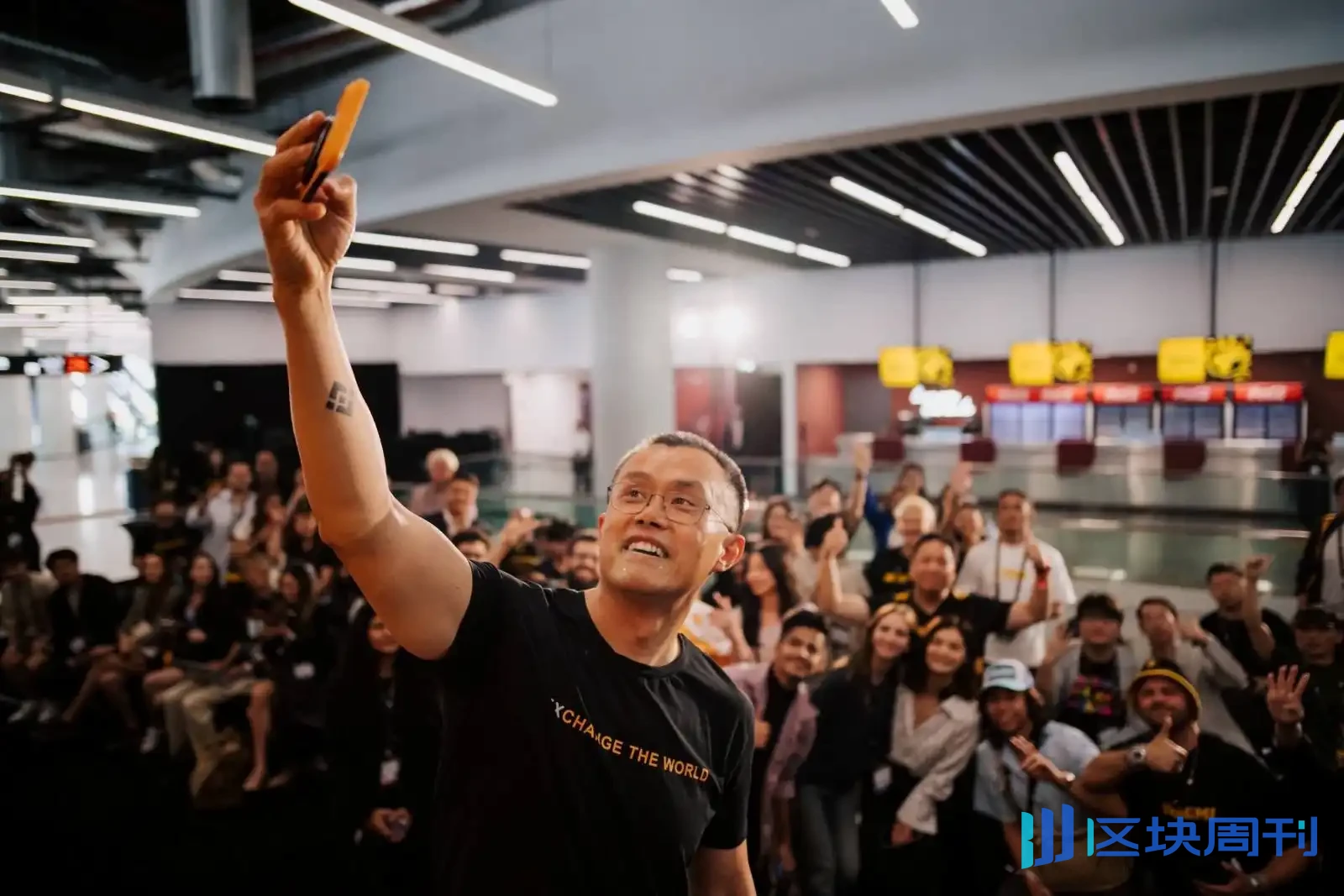
(Source: Binance)
He considers himself an introverted I-person, low-key and cautious, with low material desires. When idle, he rarely engages in online banter or quick retorts on Twitter.
The Binance culture he shaped is described by employees as extremely "hardcore," whether in terms of working hours, decision-making speed, or work intensity. "Basically, I'm immersed in work late at night and most weekends," said an early Binance member bluntly.
"From day one, Binance established an organizational logic that does not rely on physical boundaries," said Zhang Ling, head of Yzi Lab. Physical boundaries include countries and time. In plain language, no matter which country or whether problems arise day or night, someone from Binance on Earth will help you solve them.
"Headquartered on planet Earth (based out of planet earth)," before cryptocurrencies were regulated in various countries, the Binance team would even describe themselves. In an industry with no prior regulations and few precedents, the team's cohesion and execution rely on shared mission, trust, and a value of being accountable for results.
In 2018, Zhang Ling co-founded the venture capital incubator Binance Labs with Zhao, which spawned many important industry infrastructures and representative projects like public chains Polygon, Injective, Kava, etc. Renamed Yzi Labs last year, it expanded its investment scope and is one of the few projects Zhao continues to be deeply involved in after stepping down as Binance CEO.
She observed that Zhao sees things extremely sharply, makes decisions quickly, decisively, and accurately; and under high pressure, his emotions are unusually stable, completely unaffected by market noise or short-term panic. This composure is very rare among entrepreneurs.
"Most of the time, I'm thinking about how to solve problems," Zhao self-analyzed, because "future opportunities are always more than the past."
How did prison time change Changpeng Zhao? Rethinking life's positioning
Professionally extremely calm, always thinking about solving problems and breaking through levels like an engineer, always looking forward. But in this autobiography, Zhao devotes large sections to describing memories and moments with his family, as if during the slow time in prison, he looked back and re-evaluated what he expects his life's positioning to be.
He wrote about his memory of his father, who was the first college student in the village, forced to interrupt his university studies during the Cultural Revolution, but never gave up learning in a village lit only by kerosene lamps. Ten years later, he re-entered the University of Science and Technology of China, 500 miles away, for graduate studies, and eventually applied to the University of British Columbia for a Ph.D., becoming a professor, enabling the whole family to move to Vancouver.
This has made Zhao firmly believe in the power of education. After leaving Binance, he founded the non-profit educational platform Giggle Academy.
Every time he parted and reunited with his father, his father would carry a large camera, still rare at the time, and keep taking pictures of his two children, which made Changpeng Zhao also fall in love with photography.
Once during Binance's employee trip to Hokkaido, Japan, Zhang Ling brought her husband and their daughter under three years old. Changpeng Zhao met them at the hotel and, seeing the playing daughter, said to Zhang Ling, "Take more videos. When she grows up, these videos will be very precious."
He particularly emphasized that videos are better than photos, because when he spent time with his children before, he took many photos, but as they grew up, he found that what they liked most were actually the videos—because videos have sound, movement, and the way they were at that moment, things that photos cannot capture.
The following is an excerpt from an exclusive interview with Changpeng Zhao:
Around 2013, when I first got into digital currency (i.e., cryptocurrency), everyone wanted to create a virtual currency exchange, but you needed to be able to do it better, faster, cheaper, and with better service than others. Fortunately, I had been in this industry for over a decade. Before getting into virtual currency, I had already been building trading systems for many years.
In 2015, I founded Bijie Technology. I already had a team, my own system, and my own product. I just needed to turn it into an exchange, and it could go live.
At that time, we hired He Yi as Chief Marketing Officer, along with a team of customer service. This was my first time doing a consumer-facing business, and I realized that customer service and market operations are both very important.
When China's policies changed, we moved out of China and became a more international platform. Actually, I had worked at several cryptocurrency companies before, all with distributed offices. Personally, I have lived in many countries, so I don't necessarily have to be in any one country.
How to manage a company without a headquarters?
Decentralized work has many benefits. First, no commuting time wasted. Second, flexible hours. For our always-on platform, having people work from home in different countries better suits our business needs. Also, you can recruit talent globally without them having to relocate; the world becomes your talent pool.
Of course, working from home has some downsides. For example, once when I went to Dubai, I met an employee who said he had worked at Binance for three years and I was only the third real person he had met. Sometimes, face-to-face meetings are still important. Second, in management, you have to rely entirely on results because you can't see what they do every day; you can only communicate online.
To overcome these challenges, management must be results-oriented. Only then can you quickly build a global company.
As for corporate culture, I think corporate culture and values are not just about talking. To shape values, you need to implement them in every decision and every action. People will gradually see it.
For example, the culture of user protection emerged from thousands of such decisions, experienced by everyone over time. Early on, due to China's ban, we refunded Chinese ICO users and spent an extra $6 million to subsidize their losses, which accounted for 40% of our assets at the time. Actually, we didn't need to spend that money at all because it wasn't our responsibility. But since they were users on our platform, we chose to do it anyway.
Every time a decision is made, the team watches. Over time, your team knows what the boss might decide, and gradually everyone forms a shared culture and decision-making system.
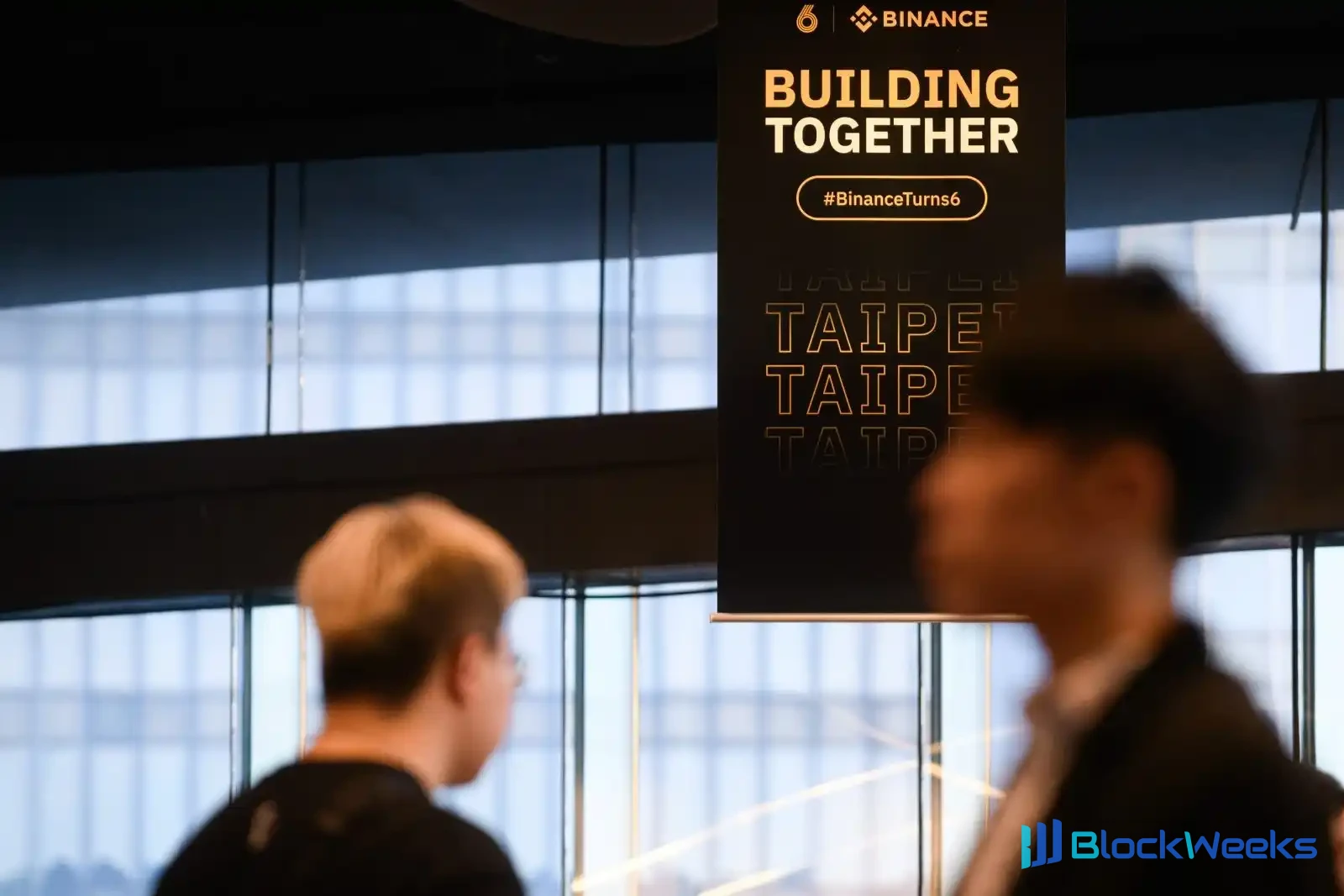
(Source: CommonWealth Magazine)
Is life fair or not? It depends on how you think.
Before going to the U.S. for negotiations, I didn't expect to go to prison there. I thought I might have to pay a fine or be under house arrest, but I didn't expect such a bad outcome. But no matter what, life always has unexpected surprises and unexpected accidents.
I think what's more important is that at the time, I wanted to solve the problem and stop worrying. I considered how to minimize the negative impact on the industry and on our users. It was my first (and hopefully last) time dealing with a legal dispute with law enforcement.
At that time, the U.S. government was relatively opposed to virtual currency, so the outcome was a bit worse than I expected. But overall, I think I've been very lucky in life. When luck is bad, you have to have some. There is no absolute fairness or unfairness in this world; it's all about how you think.
My ideal is actually quite simple. Unlike many people who have a goal, a number, or a specific achievement to complete, I just want to contribute to society according to my ability. If my ability is small, it's okay to contribute a little; if my ability is great, I try to contribute as much as possible.
My goal is to be satisfied with myself when I'm old. That is, I want to be able to say to myself, "I did my best, right?" If so, I think I will be happy.
Life goal: Be satisfied with yourself when old
What I do now is basically divided into three parts. One is free education, the Giggle Academy. There is a team of about 60 people now, and they are doing quite well. I meet with them a few times a week, and I don't spend too much time, but the whole team is built. Now the platform has over 600,000 users. A free platform in less than a year and a half has more users than ten universities combined, so I feel very happy.
Another part is YZi Labs, which does some early-stage investments. We do early incubation and help other founders grow. This has led to me becoming a mentor for many founders.
The third part is that I advise 10 to 20 government agencies to help them improve their cryptocurrency regulatory frameworks.
Doing these things keeps me quite busy, and I don't have much free time. I think the world changes very fast. Every one or two years, it's hard to predict exactly what we will be doing two years later, so the future may change over time. When investing, I look at many biotech and AI things, and I am also learning about them, so I don't rule out doing something new in the future.
Disclaimer: The information provided in this article is not investment advice. BlockWeeks.com is not responsible for any investments made based on the information provided in this article. We strongly recommend conducting independent research or consulting qualified professionals before making any investment decisions.