
You open your exchange to trade a pair and find it greyed out, suspended, or simply gone. It is unsettling, but a market becoming unavailable is usually routine and rarely means your funds are at risk. The reasons range from a brief pause to a permanent removal, and each calls for a different response. Here is why a crypto spot market gets suspended or delisted, and what it means for you.
Why a pair is temporarily unavailable
Most of the time, an unavailable market is a temporary pause. An exchange may suspend a pair during scheduled maintenance, while it upgrades systems, or in response to a technical issue. It may also halt trading during extreme volatility to protect traders from chaotic, error-prone conditions. These pauses are usually short and announced in advance, and trading resumes once the reason is resolved.
Maintenance and volatility halts
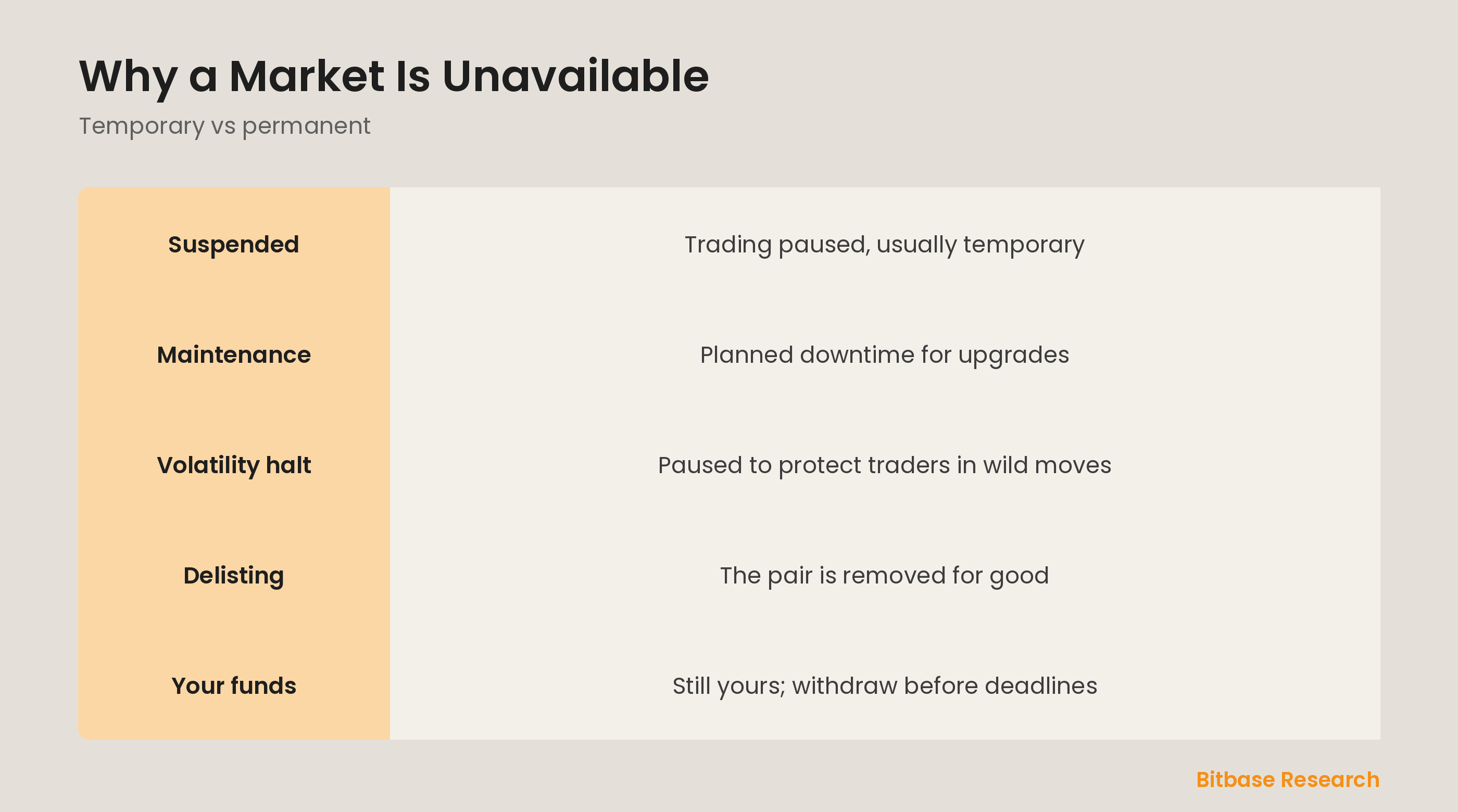
Planned maintenance is downtime the exchange schedules to improve or fix the platform, and it typically comes with advance notice. A volatility halt is different: it triggers when a market moves so violently that continuing to trade would expose users to extreme slippage and mistakes. Both temporarily freeze a market, but neither means anything is wrong with your account or your holdings, which remain safe throughout.
What delisting means
Delisting is the permanent version: the exchange removes a trading pair for good. This can happen when a project no longer meets listing standards, has very low volume, faces regulatory problems, or shuts down. Once a pair is delisted, you can no longer trade it on that exchange. Delisting is a business and compliance decision, and reputable exchanges announce it well ahead of time with clear deadlines.
What it means for your holdings
Your coins remain yours even when a market is suspended or delisted; the market being closed does not take them away. For a temporary suspension, you simply wait for trading to resume. For a delisting, act on the announcement: the exchange will give a window to sell or, more importantly, to withdraw the asset to a wallet or another platform before support ends. Missing that deadline is the real risk, so read exchange notices.
The bottom line
A crypto spot market can go unavailable for reasons ranging from routine maintenance and short volatility halts to permanent delisting. Temporary pauses resolve on their own and leave your funds untouched. A delisting is permanent and demands action: sell or withdraw the asset before the deadline the exchange announces. In every case your coins stay yours, so the key is simply to read notices and respond in time. To keep learning the fundamentals, follow more from Bitbase Academy.
Disclaimer: This article is educational content from Bitbase Academy, provided for information only. It does not constitute investment, trading, tax, or financial advice. Crypto assets are volatile; assess your own risk. Written as of June 2026; refer to the latest official information.
References
[1] Investopedia, "Delisting: What It Means, How It Works, and Types" investopedia.com
[2] CFTC, "Customer Advisory: Understand the Risks of Virtual Currency Trading" cftc.gov
[3] Investopedia, "Cryptocurrency Explained With Pros and Cons for Investment" investopedia.com