Address reuse means using the same crypto address to receive or send funds over and over, instead of a fresh one each time. It is convenient, but on a public blockchain it quietly erodes your privacy. Here is what address reuse is, why it matters, what it exposes, and the simple habit that avoids it.
What address reuse is
A crypto address is like an account number others use to pay you. Reusing an address means giving out the same one for many payments, or spending repeatedly from it, so all that activity gathers under a single identifier. It is tempting because one address is easy to remember and share, and on some chains it is even the norm. But on Bitcoin, where a fresh address is cheap to generate, reuse is generally discouraged.
Why it hurts privacy
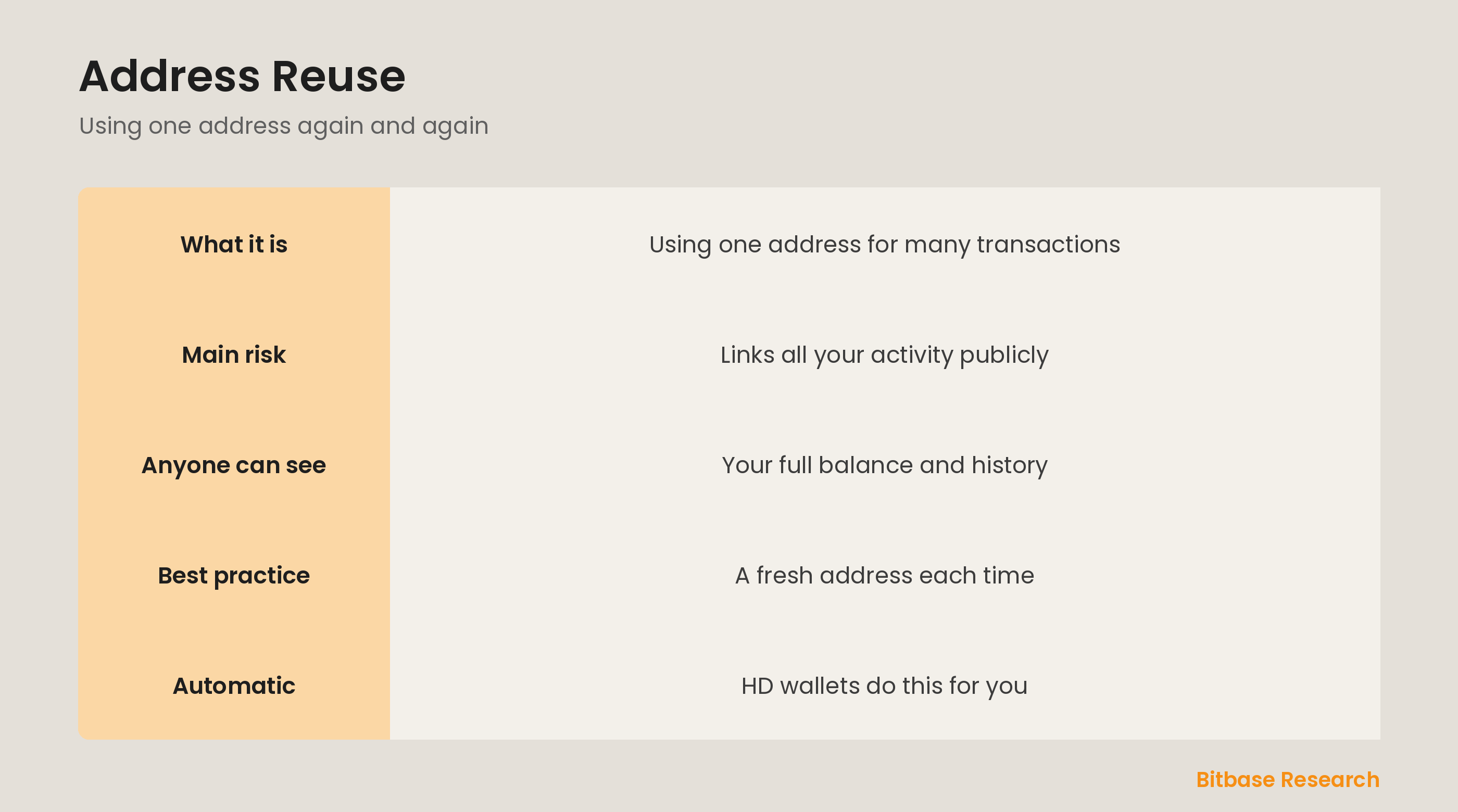
Blockchains are public, so anyone can look up an address and see every transaction tied to it. Reuse concentrates your history on one address: link it to your name once — through an exchange, a purchase, or a shared invoice — and an observer can then see your whole balance and trace funds in and out. Using a new address each time scatters that trail, making it far harder to connect the dots into a profile of you.
Best practice: a new address each time
The fix is simple: use a fresh receiving address for each payment and let your wallet manage the rest. Modern wallets are hierarchical deterministic (HD), meaning they generate an endless supply of addresses from a single seed, all recoverable from your backup. So you get better privacy at no real cost — no extra backups, no lost funds — because every one of those addresses still belongs to the same wallet.
When reuse still happens
Reuse is not always avoidable or harmful. Some exchanges and services hand you a fixed deposit address, and posting a single donation address publicly is a deliberate trade-off. There is also a structural difference between chains: account-based networks like Ethereum use one persistent address by design, so reuse is normal there, while UTXO chains like Bitcoin are built to rotate addresses. Know which model you are on and follow its grain.
The bottom line
Address reuse is using the same address repeatedly, and on a transparent ledger it links your activity together and reveals your balance and history to anyone watching. The easy defense is a fresh address for every payment, which HD wallets handle automatically. Treat addresses as disposable rather than permanent, and you keep far more of your financial life private. To keep learning the fundamentals, follow more from Bitbase Academy.
Disclaimer: This article is educational content from Bitbase Academy, provided for information only. It does not constitute investment, trading, tax, or financial advice. Crypto assets are volatile; assess your own risk. Written as of June 2026; refer to the latest official information.
References
[1] Bitcoin Wiki, "Address reuse" en.bitcoin.it
[2] River Financial, "Address Reuse" river.com
[3] Investopedia, "Bitcoin Address: What It Is and How It Works" investopedia.com