A blockchain reorganization, or reorg, is when the network discards some of its most recent blocks and adopts a different, competing version of the chain instead. It sounds alarming, but shallow reorgs are a normal part of how decentralized chains stay in sync. Here is what a reorg is, why it happens, when it is dangerous, and why confirmations are the defense.
What a reorg is
A blockchain is meant to be a single agreed history, but for brief moments two valid versions can exist at once. A reorg is the moment a node abandons the chain it was following and switches to a competing one because that other chain has more accumulated work behind it. The dropped blocks — and any transactions unique to them — are pushed back into the pending pool. The rule is simple: nodes always follow the heaviest valid chain.
Why reorgs happen
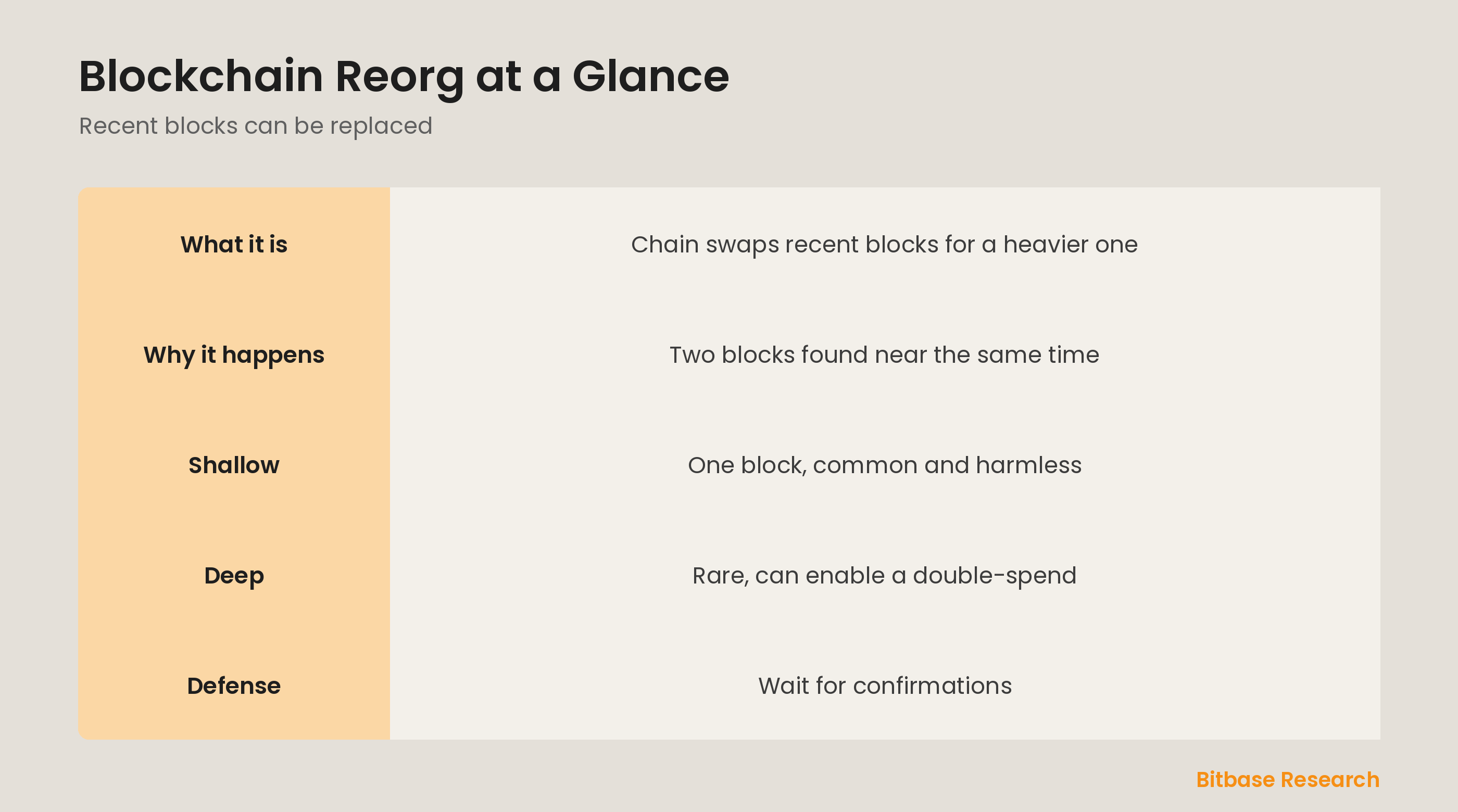
Most reorgs come from timing, not attacks. Because block producers are spread around the world, two of them can find a valid block at almost the same height within moments of each other, creating a temporary fork. Different nodes briefly build on different tips. As soon as the next block extends one side, that branch becomes heavier, and the whole network reorganizes onto it while the other block is discarded. This is the network resolving a tie.
Shallow versus deep
A one-block reorg is common and harmless; it just means the network took a moment to agree on the latest block. Deep reorgs — replacing several blocks at once — are rare and serious, because they can undo transactions that looked confirmed. An attacker who controls a majority of a chain's power could force a deep reorg to reverse a payment, the classic “51% attack” and double-spend. On large chains this is prohibitively expensive.
Why confirmations matter
Reorgs are exactly why you wait for confirmations. Each new block built on top of the one holding your transaction makes it far harder to reverse, because an attacker would have to out-mine the honest network across every one of those blocks. After a handful of confirmations the odds of a reversal become negligible, which is why exchanges credit large deposits only after several blocks rather than the instant a transaction appears.
The bottom line
A reorg is the chain briefly changing its mind about its most recent blocks as the network converges on the version with the most work. Shallow reorgs are routine housekeeping; deep ones are rare attacks that confirmations are designed to defeat. The takeaway is practical: a transaction is not truly settled the moment it lands in a block, but after enough blocks stack on top that a reorg could never realistically reach it. To keep learning the fundamentals, follow more from Bitbase Academy.
Disclaimer: This article is educational content from Bitbase Academy, provided for information only. It does not constitute investment, trading, tax, or financial advice. Crypto assets are volatile; assess your own risk. Written as of June 2026; refer to the latest official information.
References
[1] Chainstack, "Block reorganization" chainstack.com
[2] Investopedia, "Orphan Block: What It Is and How It Works" investopedia.com
[3] Ethereum.org, "Blocks" ethereum.org