
A blockchain fork is a change to the rules a network follows — a split in its path. Some forks are minor upgrades everyone accepts; others are incompatible changes that can create a whole new chain. This guide explains the main types simply.
Soft forks and hard forks
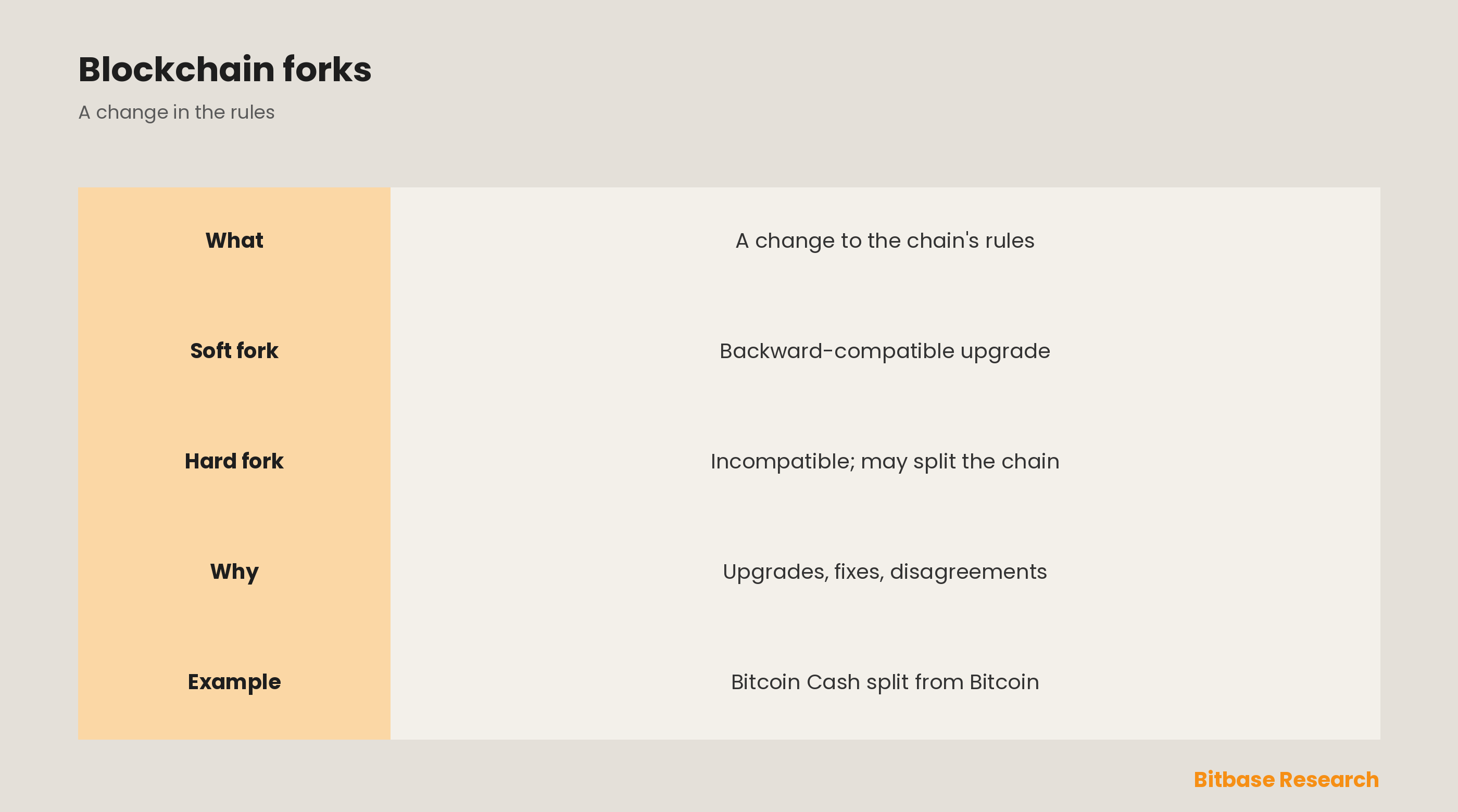
There are two main kinds. A soft fork is a backward-compatible rule change: nodes that don't upgrade still recognise new blocks, so the chain stays unified [1]. A hard fork is an incompatible change: nodes must upgrade, and if part of the community keeps the old rules, the chain can split into two — sometimes creating a new coin [2].
Why forks happen
The bottom line
A fork simply means the network's rules changed. Soft forks tighten rules while keeping one chain; hard forks make incompatible changes that can split the chain and even create a new cryptocurrency, as when Bitcoin Cash split from Bitcoin. Forks are how blockchains upgrade and how communities settle disagreements. To keep learning the fundamentals, follow more from Bitbase Academy.
Disclaimer: This article is educational content from Bitbase Academy, provided for information only. It does not constitute investment, trading, tax, or financial advice. Crypto assets are volatile; assess your own risk. Written as of June 2026; refer to the latest official information.
References
[1] Coinbase, "What is a fork?" https://www.coinbase.com/learn/crypto-basics/what-is-a-fork
[2] Investopedia, "Hard Fork vs. Soft Fork." https://www.investopedia.com/terms/h/hard-fork.asp