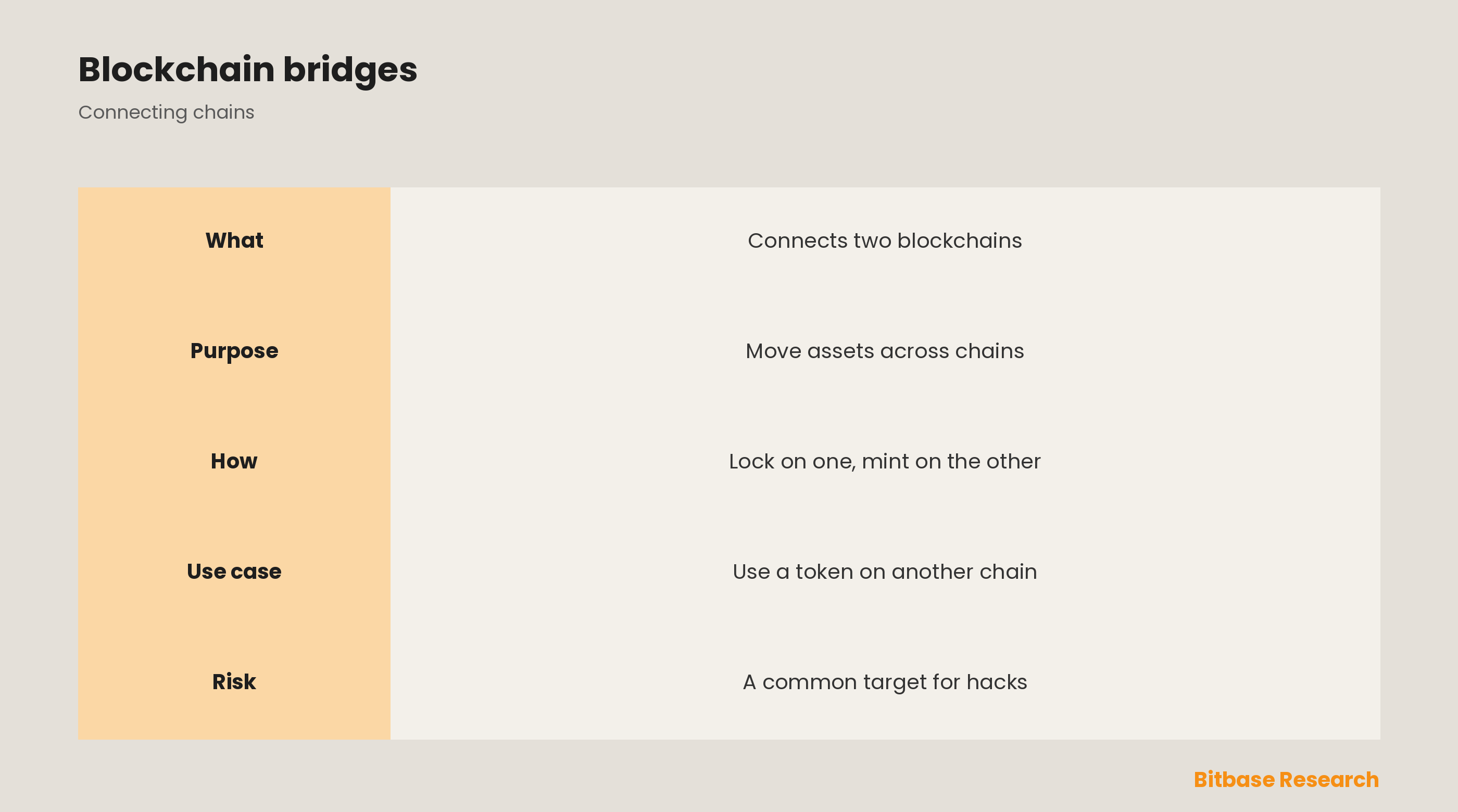
A blockchain bridge is a tool that connects two different blockchains so assets or data can move between them — for example, using a token from one network on another. This guide explains how bridges work and what to watch out for.
Why bridges exist
Different blockchains normally can't talk to each other directly. A bridge solves this by linking two networks, letting you move value across them [1]. The most common method locks your asset on the first chain and mints an equivalent "wrapped" token on the second; to move back, the wrapped token is burned and the original is unlocked [2].
How a bridge works
The bottom line
A bridge is the connection that lets assets and information cross between blockchains, making the wider ecosystem more interoperable. It's powerful, but it adds risk: bridges hold locked funds and have been frequent targets for hacks, so use well-established ones and understand the mechanism first. To keep learning the fundamentals, follow more from Bitbase Academy.
Disclaimer: This article is educational content from Bitbase Academy, provided for information only. It does not constitute investment, trading, tax, or financial advice. Crypto assets are volatile; assess your own risk. Written as of June 2026; refer to the latest official information.
References
[1] Coinbase, "What is a blockchain bridge?" https://www.coinbase.com/learn/crypto-basics/what-is-a-blockchain-bridge
[2] Ledger, "What Is a Blockchain Bridge?" https://www.ledger.com/academy/what-is-a-blockchain-bridge