"Get a wallet" is the first advice every new crypto user hears — but there are many kinds, and choosing wrong can cost you convenience or your funds. Custodial or self-custody, hot or cold, hardware or software, single-key or smart: here is how the main wallet types compare and which fits which job.
Custodial versus self-custody
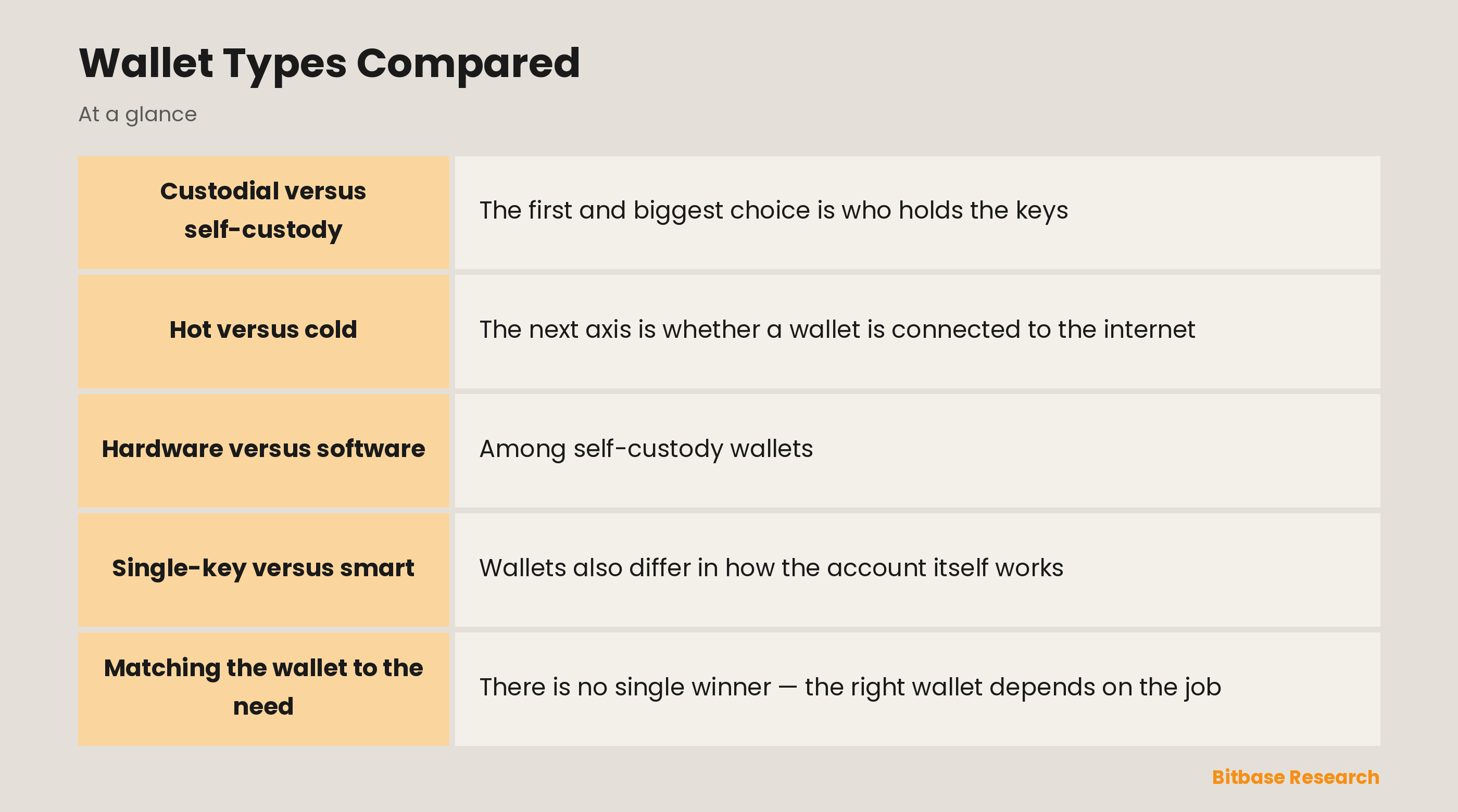
The first and biggest choice is who holds the keys. A custodial wallet, like the one on an exchange, keeps your keys for you: it is easy to use and recoverable if you forget a password, but you are trusting a third party — "not your keys, not your coins." A self-custody wallet puts the keys entirely in your hands: you get full control, but also full responsibility, because no one can recover funds if you lose your seed.
Hot versus cold
The next axis is whether a wallet is connected to the internet. A hot wallet is online, which makes it convenient for spending, trading, and using apps, but also more exposed to remote attacks. A cold wallet is kept offline, which makes it far safer for storing funds you do not touch often, at the cost of convenience. Most experienced users keep spending money hot and savings cold.
Hardware versus software
Among self-custody wallets, the split is hardware versus software. A software wallet is an app on your phone or browser: free, easy, and always a hot wallet. A hardware wallet is a dedicated physical device that keeps your keys offline and signs transactions without exposing them, giving strong protection for larger holdings. Software wins on convenience; hardware wins on security.
Single-key versus smart
Wallets also differ in how the account itself works. A traditional single-key wallet is simple but fragile — one key controls everything, and losing it loses the funds. A smart contract or multisig wallet is programmable: it can require multiple approvals, offer recovery if a device is lost, and enforce spending rules. It is safer and more flexible, but takes more setup and understanding.
Matching the wallet to the need
There is no single winner — the right wallet depends on the job. Money you spend often fits a hot software wallet; long-term savings belong in a hardware or cold wallet; shared or high-value funds call for a multisig; and someone who wants pure convenience may accept a reputable custodial service. In practice, many people use a combination, keeping only small amounts in the wallets they connect to apps.
The bottom line
There is no universally "best" wallet, only the right one for how much you hold, how often you transact, and how much responsibility you want. Custodial trades control for ease, hot trades safety for convenience, hardware and multisig trade setup for security. Match the wallet to the task, keep the bulk of your funds in the most secure option, and never store everything in a single place.
Disclaimer: This article is educational content from Bitbase Academy, provided for informational purposes only. It is not investment, trading, tax, or financial advice. Written as of July 2026; rely on the latest official information.
References
[1] Coinbase, "Custodial vs. non-custodial wallets" coinbase.com
[2] Cointelegraph, "Hot vs cold wallets: how to choose" cointelegraph.com