
Some crypto projects are not built to fail — they are built to disappear. A team raises money or attracts deposits, waits until enough value has accumulated, and then vanishes with the funds. These are rug pulls and exit scams, among the most damaging frauds in crypto. Recognising how they are structured, and the warning signs they share, is the surest way to avoid becoming a victim.
What rug pulls and exit scams are
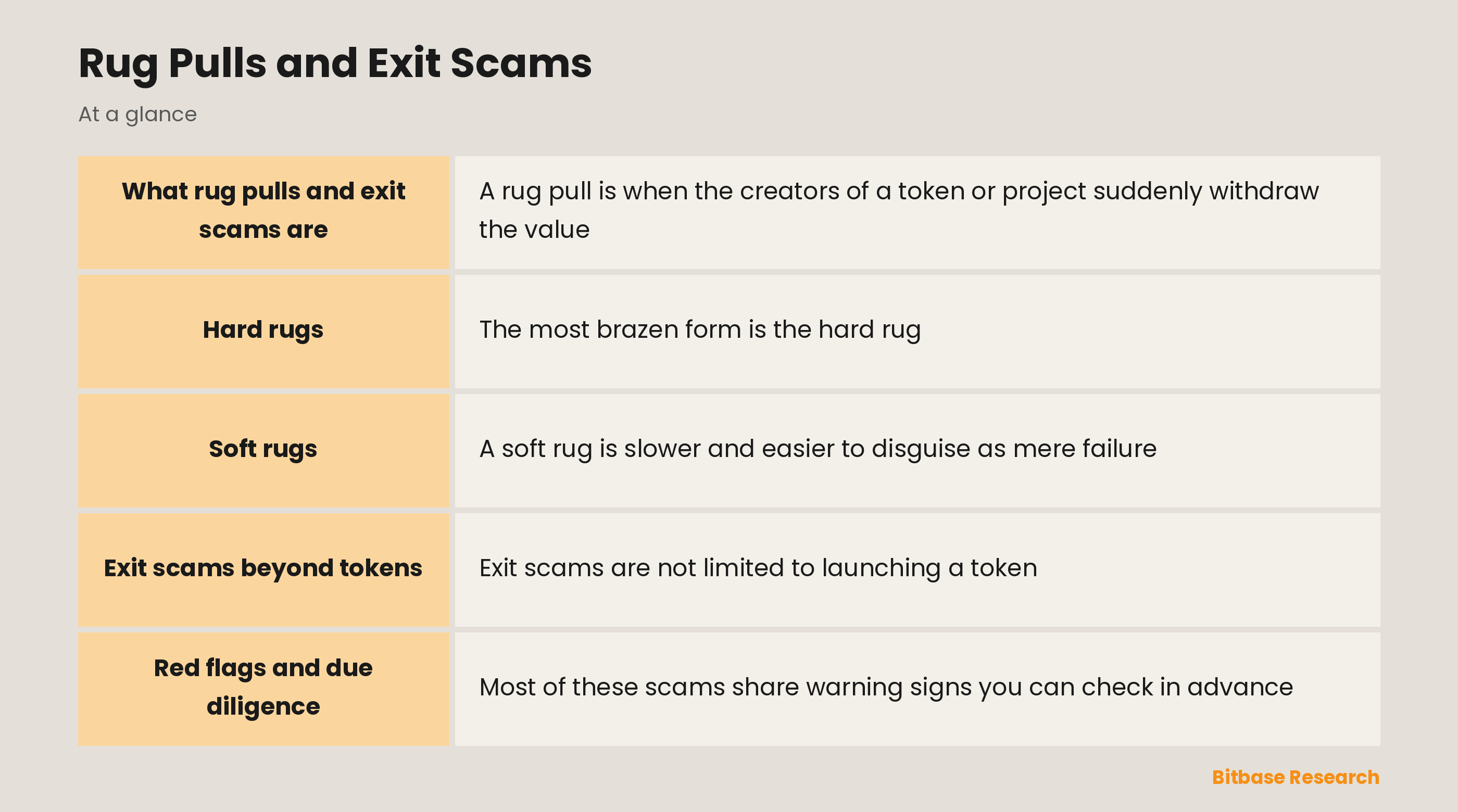
A rug pull is when the creators of a token or project suddenly withdraw the value that supports it and abandon the project, leaving holders with something worthless — the "rug" pulled from under them. An exit scam is the broader version: any scheme that collects users' money under a plausible promise and then shuts down and disappears with it. Both rely on building enough trust and deposits to make the eventual theft worthwhile, then betraying that trust in a single, irreversible move.
Hard rugs
The most brazen form is the hard rug, an abrupt and total theft. In a token, this often means the team removes the liquidity that lets people sell, so the price instantly collapses to nothing and holders cannot exit. Other hard rugs hide malicious code in a contract that lets creators mint unlimited new tokens and dump them, or block everyone but themselves from selling. Hard rugs are fast, deliberate, and usually planned from the start; the project existed only to reach the moment of theft.
Soft rugs
A soft rug is slower and easier to disguise as mere failure. Instead of one dramatic drain, the team quietly sells its own large holdings into the market, stops developing, goes silent on communication, and lets the project wither while they walk away with the proceeds. Because nothing obviously "breaks," soft rugs are harder to prove and easier to excuse as bad luck or lost interest. The result for holders is the same: a project abandoned by insiders who cashed out at their expense.
Exit scams beyond tokens
Exit scams are not limited to launching a token. Fraudulent yield platforms and lending schemes promise unrealistic returns, pay early users with later users' deposits in classic Ponzi fashion, and then vanish once inflows slow. Fake exchanges and investment apps let you deposit and even show fake profits, but quietly block or endlessly delay withdrawals until they close down. The common thread is a smooth, trustworthy front end designed to maximise deposits before the operators take everything and disappear.
Red flags and due diligence
Most of these scams share warning signs you can check in advance. Be wary of anonymous teams with no verifiable track record, promises of guaranteed or extraordinary returns, liquidity that is not locked, and contracts that let insiders mint tokens or hold a huge share of supply. Aggressive marketing, pressure to deposit quickly, and difficulty withdrawing even small amounts are serious danger signs. Favour audited, transparent projects, test withdrawals early with small sums, and never commit more than you can afford to lose to anything unproven.
The bottom line
Rug pulls and exit scams are frauds of disappearance: hard rugs drain a project instantly, soft rugs abandon it slowly, and broader exit scams collect deposits through fake platforms before vanishing. They all depend on building trust to steal it, so your protection is disciplined skepticism — verify the team, insist on locked liquidity and audits, distrust guaranteed returns, and always confirm you can withdraw before you deposit more. In crypto, the ability to leave is worth checking before you ever arrive.
Disclaimer: This article is educational content from Bitbase Academy, provided for informational purposes only. It is not investment, trading, tax, or financial advice. Written as of July 2026; rely on the latest official information.
References
[1] Chainalysis, "Rug pulls and crypto crime" chainalysis.com
[2] Investopedia, "Rug pull and exit scam" investopedia.com