Most wallets are controlled by a single key. But a growing class of wallets are programs, not keys — able to require multiple approvals, recover from a lost device, or even pay their own fees. These are multisig and smart contract wallets, and they are quietly making self-custody safer and easier.
The limit of a normal wallet
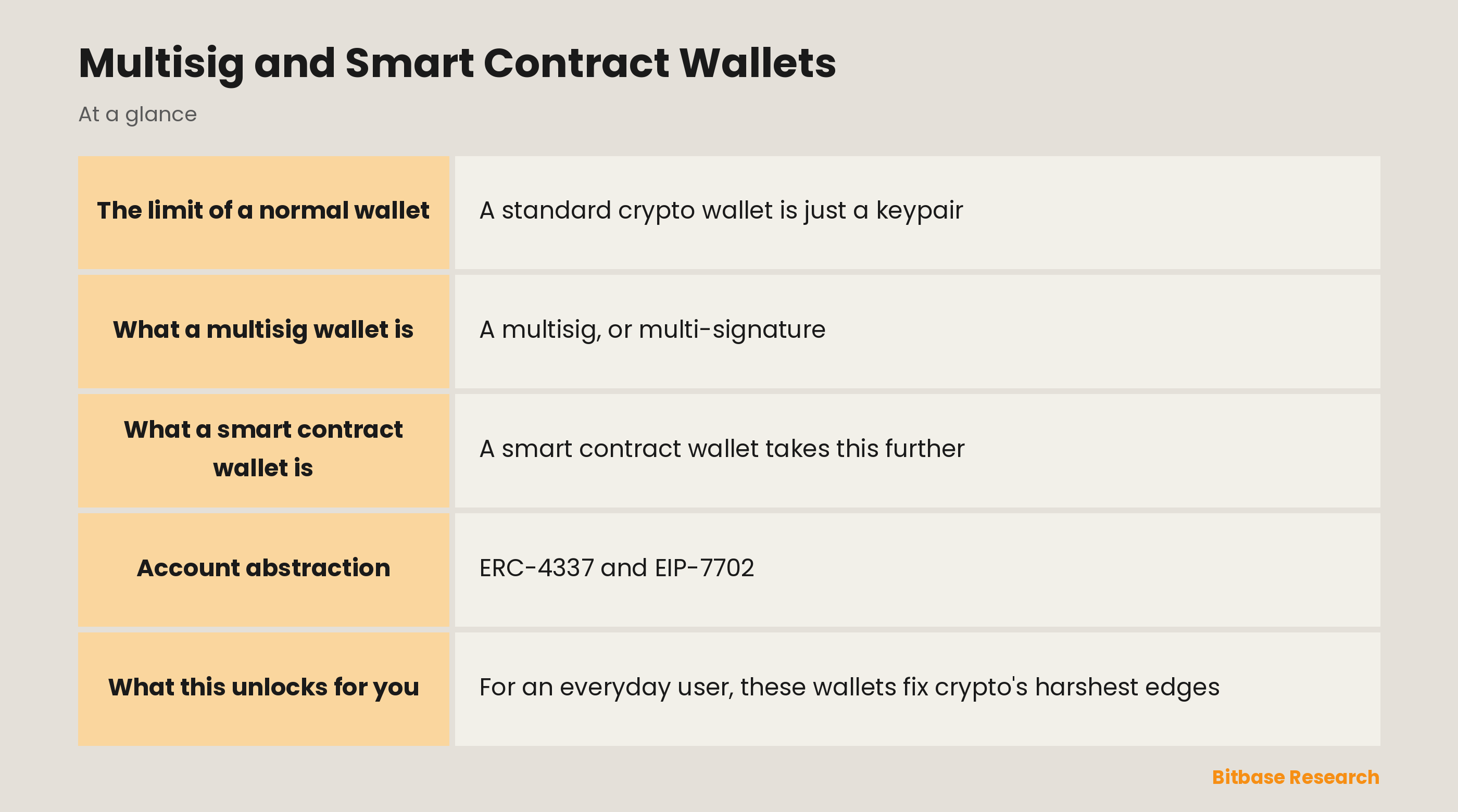
A standard crypto wallet is just a keypair, technically called an externally owned account. It has one private key and no logic of its own: whoever holds the key can move the funds, and if the key is lost, so is everything. This simplicity is elegant, but it makes an ordinary wallet fragile — a single mistake or theft is unrecoverable.
What a multisig wallet is
A multisig, or multi-signature, wallet requires several approvals before funds can move. A "two-of-three" setup, for example, needs any two of three designated signers to agree before a transaction goes through. This removes the single point of failure: losing one key does not lose the funds, and no one person can act alone. Multisig is the standard for DAOs, company treasuries, and teams, and the most widely used platform is Safe.
What a smart contract wallet is
A smart contract wallet takes this further: the account itself is a program that can enforce custom rules. It can set daily spending limits, require extra confirmation for large transfers, allow trusted contacts to help recover access, batch several actions into one transaction, and even let someone else pay the gas fee. This idea — making the account programmable — is called account abstraction.
Account abstraction: ERC-4337 and EIP-7702
Two standards drive this shift on Ethereum. ERC-4337 lets fully featured smart accounts exist without changing the base protocol, and EIP-7702, activated in the 2025 Pectra upgrade, lets your existing ordinary wallet temporarily act like a smart account. Together they have pushed smart wallets into the mainstream, with the ecosystem now counting hundreds of millions of them.
What this unlocks for you
For an everyday user, these wallets fix crypto's harshest edges. Social recovery means a lost device no longer means lost funds; passkey sign-in replaces fragile seed handling with your phone's secure hardware; you can pay fees in a stablecoin instead of a native token; and you can batch or set rules on your spending. The result is a Web2-like experience without giving up self-custody.
The bottom line
Multisig and smart contract wallets replace the fragile single key with programmable accounts that can require multiple approvals, recover gracefully, and enforce your own rules. They are the direction self-custody is heading — safer and far friendlier than a lone private key. The trade-off is that the wallet's code and how you set it up are now part of your security, so choose audited, well-established options and understand your recovery setup before you rely on it.
Disclaimer: This article is educational content from Bitbase Academy, provided for informational purposes only. It is not investment, trading, tax, or financial advice. Written as of July 2026; rely on the latest official information.
References
[1] Safe, "How multisig smart account wallets work" safe.global
[2] thirdweb, "Account abstraction: ERC-4337 and EIP-7702" thirdweb.com