For years Bitcoin was used almost purely for payments. Then Ordinals arrived, turning individual satoshis into a canvas for NFTs and tokens, and igniting fierce debate over what Bitcoin is for. Understanding Ordinals, Runes, and the fee pressure they create explains one of the biggest shifts in Bitcoin's recent history.
What Ordinals are
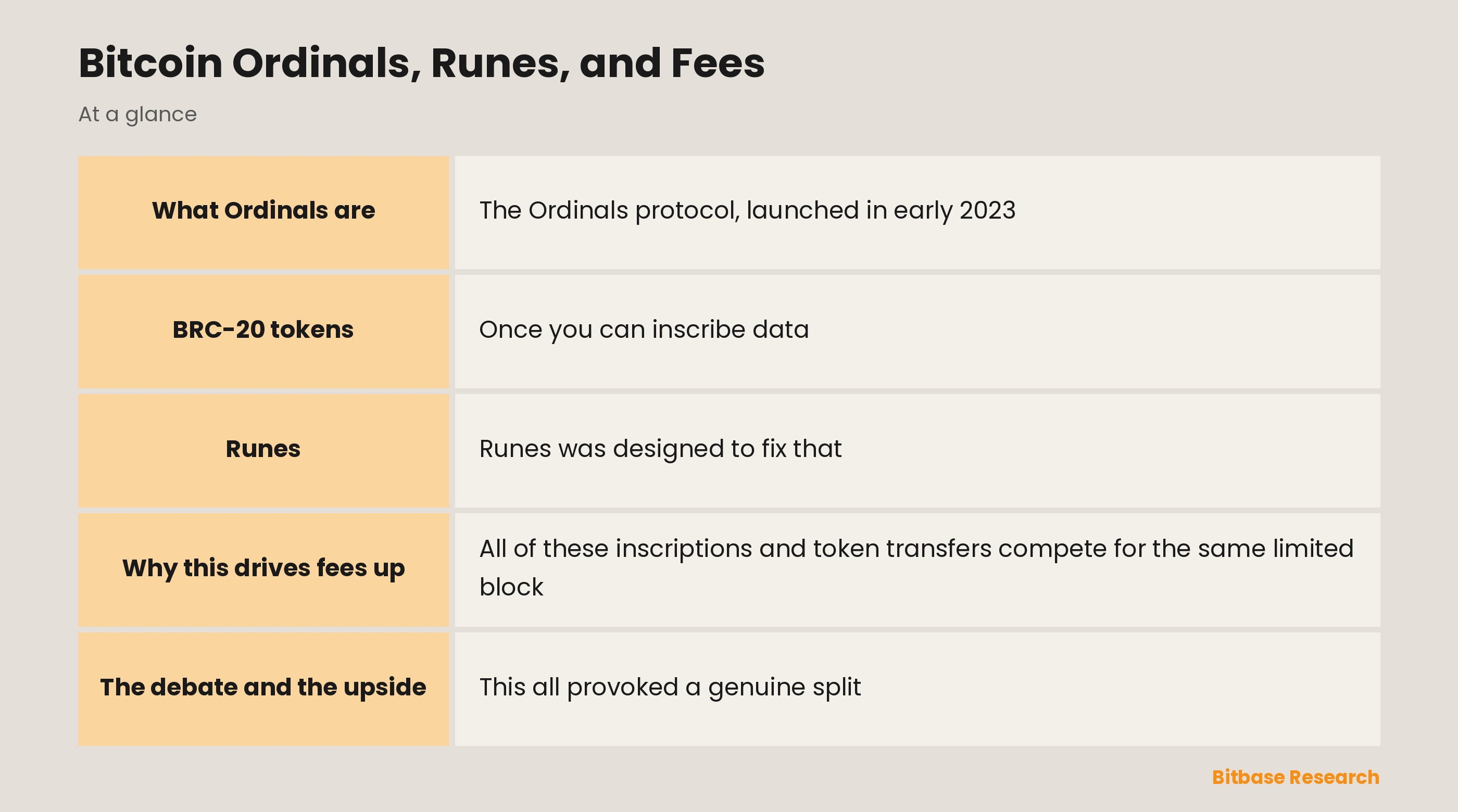
The Ordinals protocol, launched in early 2023, lets people number individual satoshis — the smallest unit of Bitcoin — and inscribe data such as images or text directly onto them. This effectively created Bitcoin-native NFTs, called inscriptions. The idea caught fire: by 2026 the number of inscriptions had crossed well over 90 million, marking one of the most significant cultural shifts on Bitcoin since Taproot.
BRC-20 tokens
Once you can inscribe data, you can inscribe rules for tokens. BRC-20, created anonymously in March 2023, was the first attempt at fungible tokens on Bitcoin, using simple text inscriptions to define and transfer coins. It sparked a speculative frenzy, but it was crude and inefficient — every action required a new inscription, which bloated the chain and drove up fees.
Runes
Runes was designed to fix that. Launched at the 2024 halving by the creator of Ordinals, it builds fungible tokens directly on Bitcoin's native UTXO model, making them far more efficient and cleaner than BRC-20. Runes quickly came to dominate fungible-token activity on Bitcoin, accounting for a large share of all token-related transactions and largely displacing the messier BRC-20 approach.
Why this drives fees up
All of these inscriptions and token transfers compete for the same limited block space as ordinary payments. When Ordinals or Runes activity surges, the fee market heats up and everyone's transaction gets more expensive. For the first time in years, non-payment data became a major, sustained driver of Bitcoin fees — a dynamic that can price out simple transfers during busy periods.
The debate and the upside
This all provoked a genuine split. Critics call inscriptions "spam" that clogs a payments network and raises costs for everyone. Supporters argue it brings new users, new use cases, and — crucially — new fee revenue for miners, which matters more as block rewards shrink with each halving. Both points are real: the same fees that annoy a saver help fund the security every holder relies on.
The bottom line
Ordinals opened Bitcoin to NFTs, BRC-20 introduced clumsy tokens, and Runes made them efficient — together turning Bitcoin into an unexpected hub for on-chain assets. The cost is a busier, sometimes pricier fee market, and a lasting argument over Bitcoin's purpose. Whatever side you take, these standards are now part of how Bitcoin works, and they directly affect the fee you pay.
Disclaimer: This article is educational content from Bitbase Academy, provided for informational purposes only. It is not investment, trading, tax, or financial advice. Written as of July 2026; rely on the latest official information.
References
[1] DEXTools, "What Are Bitcoin Ordinals: NFT Inscription Guide 2026" dextools.io
[2] Gate Learn, "Running Bitcoin, Runes and Ordinals" gate.com