In February 1996, John Perry Barlow signed the "Declaration of the Independence of Cyberspace" in Davos. He told the "governments of the Industrial World" that cyberspace is not within your sovereignty. Then he wrote a sentence: "Cyberspace is everywhere, yet it is not a place where bodies reside."
Relationships in the network need not be determined by birth, military, or real estate. A person can speak, trade, and associate in front of a screen. Whether one is in Beijing, New York, or Bangalore hardly matters.
Thirty years later, the internet age has not overturned this statement; instead, it has led more people to ponder the second half of the sentence.
The strangest change in the internet age in recent years is the re-gathering of people in physical spaces. Digital nomad communities, Hacker Houses, and temporary cities have moved out of social apps one by one, becoming a plane ticket, a lease, co-living, and an identity document.
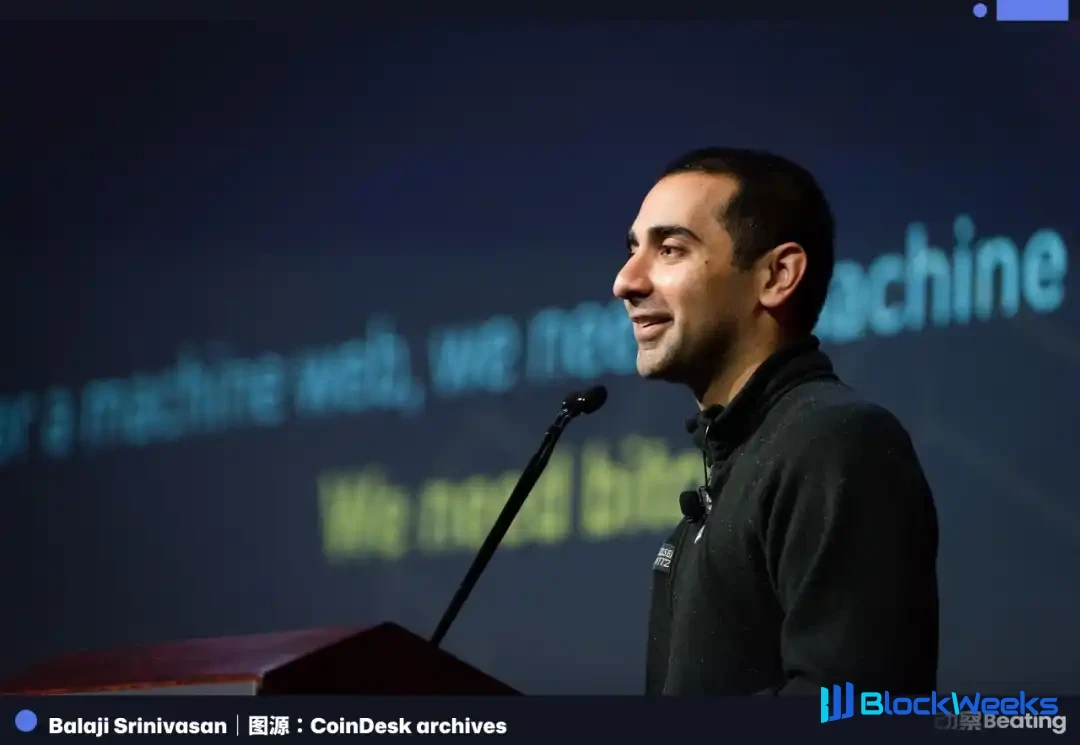
Balaji Srinivasan is the person who has thought about this most seriously. In his book "The Network State," the path he describes is "Cloud First, Land Last": first gather as a community in the cloud, attract people and capital, then buy or lease scattered nodes in the real world, and finally, he says, seek diplomatic recognition.
In 2024, he turned the first step of this path into a school called Network School, located in the forest city at the southernmost tip of Malaysia. On July 21, 2026, the Iskandar Puteri City Council revoked its business license, effective from the 22nd.
Genes, Attention, Money, and Then People
First, look at what Balaji has been doing for the past twenty years, and you'll understand why he founded Network School.
He grew up in Long Island, New York, the son of parents who immigrated from Tamil Nadu to become doctors in the United States. He studied electrical engineering at Stanford from undergraduate to PhD, also earned a master's in chemical engineering, and then co-founded Counsyl, which does genetic carrier screening. Families planning to have children receive a report showing the risks and probabilities of recessive genetic diseases. This report turned research and expert terminology previously locked in laboratories into a document that couples could take home and discuss over the dinner table.
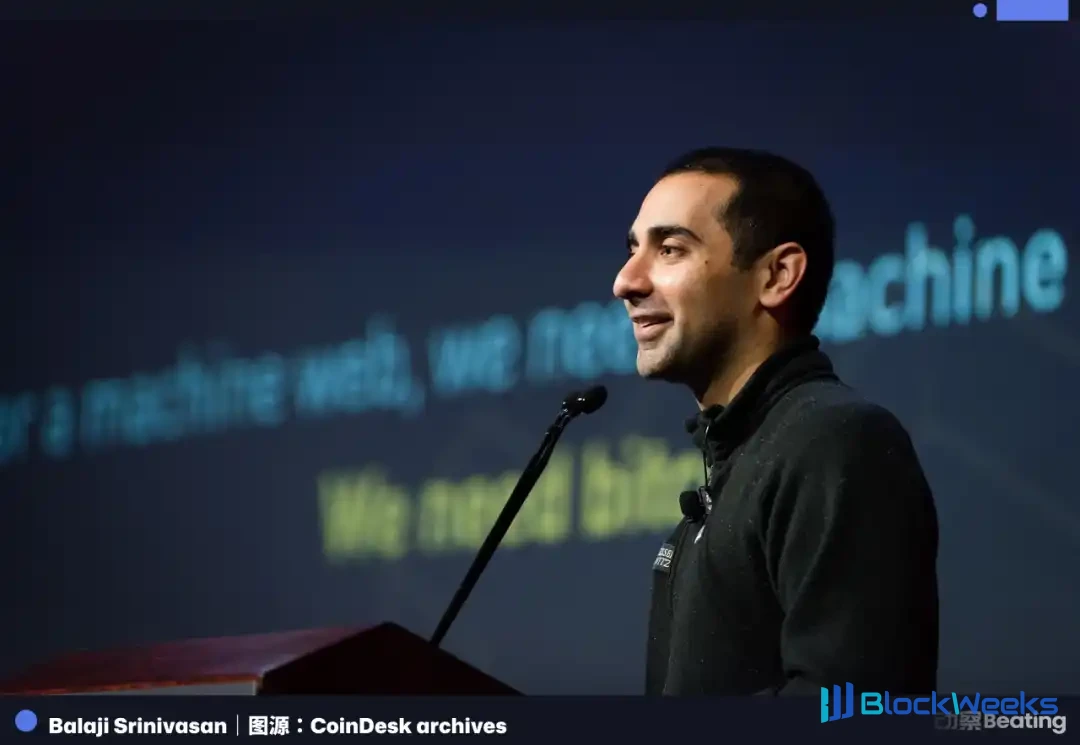
He worked on a project called Earn, which allowed strangers to pay with cryptocurrency for a reply to an email, giving a person's time a listed price for the first time. In 2018, Coinbase acquired Earn, and Balaji became Coinbase's CTO, during which he promoted the launch of the stablecoin USDC. Additionally, he was a GP at a16z.
You see, these pieces of his resume are essentially doing the same thing: turning things that were previously interpreted, preserved, and verified by large institutions into records that individuals can read, carry, and trade. Genetic risk is like this, attention is like this, and money is like this. Following this line of reasoning, the next thing that can be packaged and taken away is people themselves, along with their work, credit, and social relationships, all migrating together.
So he moved first. He settled in Singapore, and in March of this year, he posted a widely circulated message on social media, roughly meaning that libertarianism can only work when paired with Lee Kuan Yew-style order.
There Must Always Be Someone at the Door
The idea of moving people along with their property is not something Balaji came up with on a whim; it has a clear evolutionary path of thought.
In 1997, former editor of The Times William Rees-Mogg and American investment writer James Dale Davidson co-wrote "The Sovereign Individual," predicting that information technology would shrink nation-states, turning individuals from citizens into customers, and casually described an encrypted, anonymous digital currency that could be traded in a borderless market. Twelve years later, Bitcoin emerged, closely matching the book's description, and many have believed that Satoshi Nakamoto was inspired by this book.
Peter Thiel said this book influenced him more than any other. In 2009, he wrote his famous article stating that he no longer believed freedom and democracy could coexist, and listed cyberspace, outer space, and seasteading as frontiers where freedom might re-emerge.
Thiel asked how to leave a disappointing system. Balaji continued to pursue this question, asking, what comes after leaving?
In "The Network State," there is a term: Recognized Founder. A movement calling for individual freedom, when reduced to an operational manual, first establishes a leader.
Balaji writes this for a reason. The ability to exit has never been equally distributed. Some can change passports, time zones, and lifestyles, while others are pinned down by family, debt, and professional licenses. Friends, clients, reputation, and assets are often tied to the previous ship, and no one can dismantle their own share alone. So exit cannot be done individually; someone must lead, gather scattered people and money, and pave the way for those who cannot move. That leader is the Recognized Founder.
This role is somewhat like Zhang Beihai in "The Three-Body Problem," the space force political commissar who does not believe humanity can win, feigns loyalty for decades, hijacks a starship before the doomsday battle, and leads thousands into deep space. The novel gives him tragedy but also leaves a thorn. The "Natural Selection" is not his; it is a ship built by all of humanity. Those who prepare an exit for others never use only their own resources.
This thorn was also seen by Ethereum founder Vitalik Buterin. After reading "The Network State," he acknowledged that Balaji takes morality and communal life more seriously than most self-serving libertarians, and then asked two questions. Why must there be a Recognized Founder? The new community uses the resources of the surrounding society; who accounts for that? The first question doubts the power of the leader; the second asks about Zhang Beihai's ship.
In the spring of 2023, Vitalik organized a temporary city called Zuzalu on the coast of Montenegro, with about 200 people living there for two months, discussing crypto, longevity, and governance. This time, there was no officially recognized founder; everything was self-organized by members. Over two months, eating, exercising, and organizing events went smoothly; more than a year later, he admitted in a review that two hardest things remained unresolved: governance and membership, especially the latter. And regardless of his personal wishes, the outside world consistently called it "Vitalik's temporary city."
After going full circle, the problem returns to the starting point. No matter how warm the word community is, there must be someone at the door deciding who enters and who leaves. The only difference is whether this person is explicitly written into the charter or tacitly accepted by reality.
Network School is Balaji's answer.
How an Application Form Screens a Community
In August 2024, Balaji announced the establishment of Network School, with the first session from September 23 to December 23. Shared accommodation costs $1,000 per month, private rooms $2,000. Daily activities are summed up in four words: Learn, Burn, Earn, Fun. Learn technology, exercise, earn money together, and live together.
He called the recruitment target "Dark Talent," borrowing from the term "dark matter," meaning talent not yet seen by old institutions. This term resonated with many. Degrees, company names, and big cities still pre-assign work and life for people, and many capable individuals never encounter a real opportunity in their lifetime.
But if you look closely, Network School did not remove the threshold; it just changed its form. Some early applicants paid a deposit of up to $2,000 before the school location was announced. The application form, besides asking about technical background, also asks you to rate a series of unrelated items, including Bitcoin maximalism, military technology, Dubai, Marx, Jordan Peterson, and Israel. The first session received over 4,000 applications from more than 80 countries, but only 128 spots were available.
Elevator to a side event in Xuhui District
Today, individuals, couples, families, and teams can apply to join Network School, staying for a month or a year. Shared accommodation has risen to $1,500 per month, private rooms to $3,000. Fellowship is another way to apply. Founders and creators from any country can apply for a $100,000 grant plus a one-year membership, with a list of prominent investors displayed on the page.
In his 2025 review, Balaji admitted that teaching and making money are somewhat contradictory for everyone. If the course is too basic, senior engineers feel it's a waste of time; if it's too difficult, members who mainly come to network can't keep up. A single course cannot satisfy both groups. What ended up working best were fitness, fun, eating together, and living together.
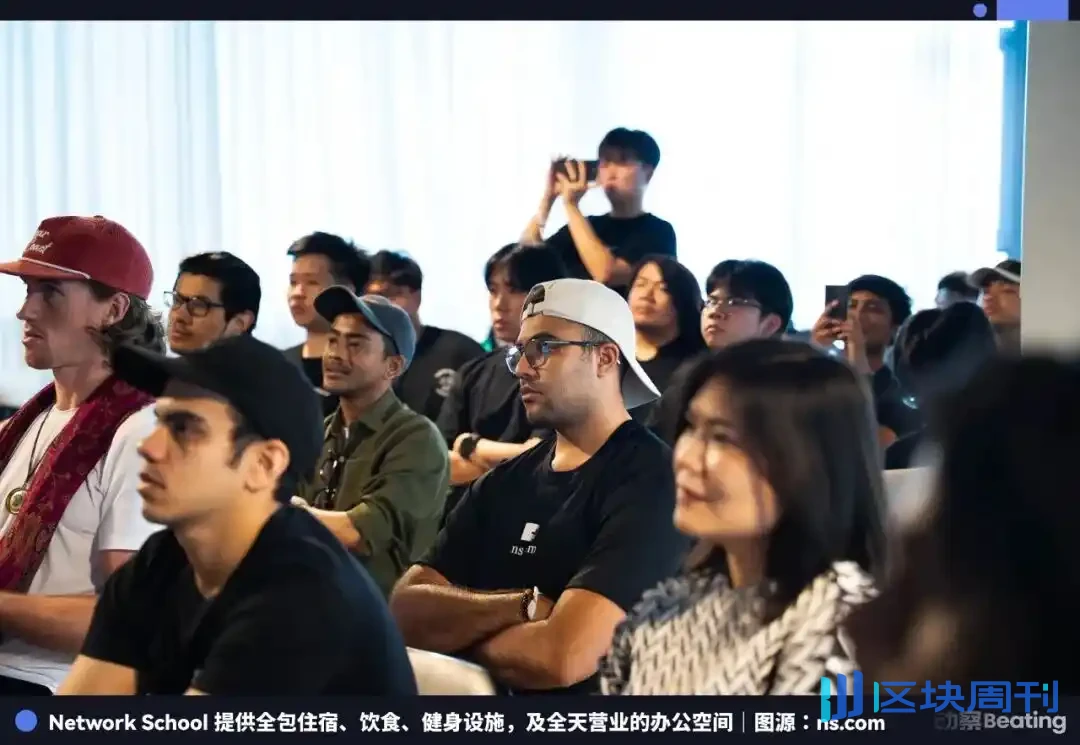
A member who stayed for a month in 2025 recalled that the school was set up in a hotel in Forest City, with a gym on the rooftop, the 13th floor for dining and events, and a co-working space a kilometer away. At its peak, there were over a hundred people, mostly Indian faces, followed by Americans, and about 80% male. Most activities were optional, often organized by members themselves.
The Process Is the Punishment
In early July, an anonymous Instagram account accused Network School of harboring Israelis who entered Malaysia with third-country passports. At the time, Johor, where Network School is located, was approaching an election, and Malaysia does not recognize Israel, with no diplomatic relations between the two countries. The accusation became a political issue.
On July 14, the Ministry of Home Affairs stepped in. The next day, immigration checked 266 foreigners from 40 countries, and all documents were valid.
On July 16, Balaji published a lengthy response, which essentially consisted of three actions: pleading innocence, tallying accounts, and showing his cards.
He said the accusations were baseless and that the officials who visited were polite and professional, but he quoted an old saying from the U.S. legal system: "The process is the punishment." Even if nothing is found, the investigation itself has already punished the person. Time, reputation, and morale are all consumed in the process.
In the tallying part, he was very detailed. Over 100 million ringgit in real money, dozens of local jobs, and even surrounding property prices had been boosted by the project. After tallying, he announced a halt. The subsequent 500 million ringgit expansion plan and the global scholarship program co-founded with Replit's founder were all suspended.
Then he showed his cards: he wanted to meet Prime Minister Anwar Ibrahim and sign a memorandum stating in black and white that he and his friends are welcome here. He said they don't want money, just a meeting. He said global tech executives and the largest venture capital funds are watching how Malaysia handles this.
On the other side, municipal officials visited and found that one of the two venues had no business license, while the other had an office license but was used for classes. On the 18th, a cessation order was issued, and on the 21st, the license was revoked. State Chief Minister Onn Hafiz expressed support, stating that no one is above the law, and also asked the Ministry of Digital to re-examine the various official recognitions previously granted to the company.
This Empty City Was Waiting for Them
Many might think this is another story of a rebellious tech community crossing the red line of a conservative country. But the truth is the opposite: Malaysia is not only not conservative, but it is arguably one of the most eager countries in the world to attract these people.
First, look at the Forest City site. It is located at the southernmost tip of Johor, adjacent to the Second Link, and built on reclaimed land. Forest City is a joint venture between Country Garden and a Johor state-owned company, with the Chinese side holding 60%. Launched in 2016, then-Prime Minister Najib Razak personally attended and declared it a duty-free island. The total project is about $100 billion, planning for nearly a million people.
This city was primarily built for Chinese buyers. Sales offices were opened in dozens of cities across China, with 60% of buyers from China, attracted by tax exemptions, proximity to Singapore, and an overseas property certificate.
What happened next unfolded on two fronts. In China, in 2017, foreign exchange controls tightened, with a $50,000 annual limit per person explicitly not allowed for overseas property purchases, and domestic showrooms closed one by one. In Malaysia, the 2018 election brought a change of government. Najib, who had endorsed Forest City, stepped down, and new Prime Minister Mahathir Mohamad said that the city's properties should not be sold to foreigners, and those wanting to live there should not expect visas. This statement never became formal law, but the market understood. Those who wanted to come couldn't, and those who bought didn't know if they could live there. A city prepared for a million people was left hanging by the strait.
When BBC visited in 2023, the project was about 15% complete, with only about 1% of the planned population living there. At night, high-rises were dark, like a ghost town. This city, built for a million people, became the largest inventory of the entire overseas expansion era.
Still from "The Great Gatsby" film | Source: Douban
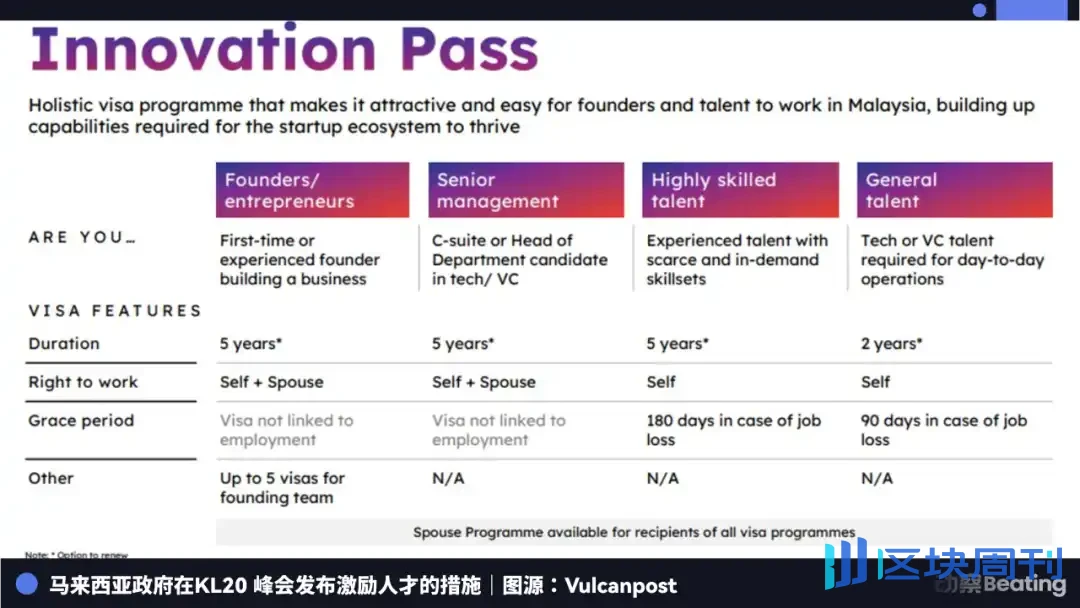
Malaysia, on the other hand, doubled down. In 2024, the government designated Forest City as the country's first special financial zone, specifically targeting fintech companies and family offices. Earlier, there was the KL20 plan to rival global tech hubs, a digital nomad visa, and a special economic zone jointly built by Johor and Singapore. Balaji later said he chose Forest City for Network School because of these policies.
A country eager to clear inventory and a community eager to find a location hit it off in an empty city. The country offered policies and discounts, the community brought people and money, and the honeymoon was so lively that no one scrutinized the contract. The country thought it was attracting investors; the community thought it had found a foundation. The enthusiasm for investment and the rigidity of law enforcement are two sides of the same coin. Being welcome only means you are needed, not that you are understood.
There is also a complex issue. Count how many powers overlap on this reclaimed land. A city built by a Chinese developer, with equity from Johor's state capital, federal government special zone policies, traditional authority of the Sultan, capital spillover from Singapore across the strait, and now a community claiming to be a network state. In medieval Europe, such overlapping sovereignty was called a march. People in marches paid the least tax, had the most freedom, and faced the most unstable rules. Balaji chose Forest City precisely because it is a 21st-century march: full of gaps and low cost. But any layer of power in a march can flip and bring you to a halt.
Cows Grow Wings
"The Sovereign Individual" contains a metaphor: the state treats taxpayers like cows, penning them on a farm to milk them, but soon, "the cows will grow wings."
Many people love this quote, reading it as a satisfying story. But the next page actually says that desperate farmers will take desperate measures to block the escaping herd, using covert and arbitrary means to restrict access to liberating technologies.
Wings are a trend; fences are reality. Both are prophecies, but they materialize in sequence. July in Johor demonstrated how fences can be erected.
After the fences went up, there is actually a historical precedent.
In 2013, Honduras passed a law allowing private semi-autonomous cities. The U.S. company Próspera actually built one on an island, with its own regulations and a written promise of 50 years of stability. In 2022, the political landscape flipped, and the new Congress unanimously repealed the law. The president said it was about reclaiming sovereignty. Próspera did not move; it sued the country at the World Bank's arbitration tribunal, claiming nearly $11 billion, about two-thirds of Honduras's annual budget. Honduras responded by withdrawing from the arbitration mechanism. The case remains unresolved to this day.
Looking at the experiments discussed earlier: the lightest, Zuzalu, dissolved on schedule; the deepest, Próspera, is in an endless lawsuit; the middle-ground Network School was kicked out by a license. Their commonality is that once they land, they are within the range of sovereignty.
After this blow, Balaji showed his wings. Capital can be reallocated; people can go to other countries. This card doesn't work on everyone. For a city that has been empty for a decade and is counting on his money to recover, these words are a threat. But for a government that just publicly said "no one is above the law," being seen as bowing to money under the public eye would cost far more than losing an investment, especially during an election month.
On July 22, the Network School cessation order took effect. The rooftop gym, the 13th-floor restaurant, and the one-kilometer road were all empty. At night in Forest City, one more patch of lit windows went dark.
Thirty years ago, Barlow said that cyberspace is everywhere, but it is not a place for bodies. Today, the first half belongs to the still-accessible website, and the second half is left to the darkened buildings of Forest City.